Far-left podcaster Emma Vigeland raised eyebrows this month with her reaction to Maine oysterman Graham Platner’s political collapse.
Vigeland, a former Young Turks correspondent who now co-hosts The Majority Report With Sam Seder podcast, said on a separate Vox podcast that she doesn’t care if a progressive or socialist candidate has “Nazi” skeletons in their closet.
“I am wary of over-focusing on an individual’s personal character over their platform. You know, I’ve said this before. I don’t really care if say like Bernie Sanders or AOC go home and they’re a secret Nazi, but they go out and they vote for the right things. Like we’re talking about politicians…” the Democratic Socialists of America member said during the podcast, which published earlier in July.
I’m so old, I can remember when “punch a nazi” was an endlessly recurring phrase on the far left during Trump’s first term.
Andy Burnham has revealed a 1970s-style vision for Britain, saying his appointment as Labour leader was “the most significant change” in politics in the past 40 years.
In a speech on Friday, Mr Burnham said the country had taken “a series of wrong turns in the 1980s”, adding that he wanted “more power to reindustrialise”, and the public ownership of utilities and council houses.
* * * * * * * *
Mr Burnham promised to end the post-Thatcher consensus on privatisation and central government control, arguing that while politicians had called for the public to “take back control… they were the ones who gave it away in the first place”.
He said: “We must recognise that this generation of politicians – myself included – have failed to challenge a political culture and an economic model that simply doesn’t work well enough for ordinary people.
“Four decades of the neoliberalism that began in the 1980s have not been kind to the places that built our party, nor to the communities across the UK in rural and coastal areas. So we pledge today to them to be better.”
Drawing on his experience defending Hillsborough disaster victims, he said political power had been used “viciously against them to protect vested interests”, while “economic power [was] cruelly stripped with the deindustrialisation of the 1980s”.
His pitch was also an implicit rejection of the New Labour years, when Mr Burnham made his early political career in the Cabinets of Sir Tony Blair and Gordon Brown.
What could go wrong?
The past may be, as L. P. Hartley wrote, another country, but it’s rarely as foreign as Britain in the 1970s. Viewed from the United Kingdom of 2005, the day before yesterday is a banana republic without the weather. Inflation was up over 25 percent, marginal tax rates were up over 90 percent, and the only thing heading in the other direction was the pound, which nosedived so suddenly in 1976 that the chancellor of the exchequer, en route to an International Monetary Fund meeting, was summoned back from the departure lounge at Heathrow to try to talk his currency back up to sub-basement level. Her Majesty’s government had itself applied for a $4 billion loan from the IMF. Were the Britain of thirty years ago to re-emerge Brigadoon-like from the mists, it would be one of those basket cases that Bono hectors Bush about debt forgiveness for.
Such great Britons as the era could muster—Roger Moore, Michael Caine—had decamped to Switzerland and Beverly Hills. As if to underline the national decline, every flailing industry flew the moth-eaten flag: British Steel, British Coal, British Leyland. They were all owned by the state—even the last, which was the national automobile manufacturer. The government had taken all the famous British car marques—Austin, Morris, Rover, Jaguar, Triumph—and merged them into one. That’s right: the government made your car. Or, rather, a man called Red Robbo did, when he was in the mood, which wasn’t terribly often. He was the local union man at the Leyland plant in Birmingham, though he seemed to spend more time outside the gate, picketing. In Britain union leaders were household names, mainly because they were responsible for everything your household lacked. In the seventies if you opened The Times (when the print unions weren’t on strike) or watched the BBC news (when the miners weren’t on strike and the government hadn’t ordered the TV to close down mid-evening to conserve electricity), it was a parade of eminences from strange, unlovely acronyms such as ASLEF and SOGAT and NATSOPA and NACODS being received by the prime minister as if they were heads of state, which in a sense they were. Britain’s system of government in the seventies was summed up in the phrase “beer and sandwiches at Number Ten”—which meant the union leaders showing up at Downing Street to discuss what it would take to persuade them not to go on strike, and being plied with the aforementioned refreshments by a prime minister reduced to the proprietor of a seedy pub, with the cabinet as his barmaids. The beer and sandwiches went only so far, and would usually be followed a day or two later by chaotic scenes on the evening news of big, burly blokes striking for their right to continue enjoying the soft, pampering workweek of the more effete Ottoman sultans.
The man who presided over the death throes of this ramshackle realm was James Callaghan, prime minister from 1976 to 1979, and an instructive study for all those obituarists of President Ronald Reagan who were so anxious last June to attribute his success to a genial disposition, sense of humor, charming smile, tilt of the head, etc. If you want to know what Reaganesque affability without political will or philosophy boils down to, look at Callaghan. He was famously avuncular; he was known as Sunny Jim. But by the time he and his Labour government left office, the sunniness had decayed into torpid complacency. His most famous words were “Crisis? What crisis?”—which he never actually said, but were put in his mouth by an enterprising headline writer from Rupert Murdoch’s The Sun. And they fit so well that they stuck.
The Middle East is now suddenly a different place. Whatever the final denouement with Iran, Tehran has lost a half-century and half-trillion-dollar investment in its military and nuclear industrial complex. The once-feared bully of the Muslim Middle East has been humiliated and exposed as a paper tiger, with its economy, and perhaps its very existence, now dependent on the disposition of the Trump administration. It leaves Israel alone because it knows the Jewish state can target any of its unhinged leaders whenever hostilities resume.
In a development that would once have seemed surreal, Israel is providing intelligence and missile defense to the Muslim Gulf states, which are effectively fighting alongside the United States and Israel against a fellow Muslim nation.
Hamas has been crushed. Hezbollah’s once-feared missile arsenal and many of its crazy leaders have been largely eliminated. The Houthis, lacking any credible air defenses, know that every missile they launch at Israel or into the Red Sea could cost them another port facility or power station. Lebanon is reawakening from its 50-year coma.
Russia lost its last client in the Middle East with the fall of the Assad regime. Neither China nor Russia can supply Iran by land, sea, or air, nor can either purchase its sanctioned oil. America’s allies are growing stronger, while the China–Russia axis grows weaker.
Soon the Strait of Hormuz—Iran’s supposed trump card—will be nearly as irrelevant to global energy markets as it is already to the United States. Existing pipelines that bypass the Gulf are being expanded, while new ones are planned or already under construction to the Red Sea, the Mediterranean, and the Gulf of Oman beyond the Strait. The United States is the largest producer of oil and gas in history and does not need Middle Eastern oil or gas—or, for that matter, much of anything else besides.
Exit quote: “Add it all up, and the picture is almost surreal: at the very moment the Left insists that the United States has grown weak and isolated, America and its allies occupy a position of global preeminence not seen since the end of World War II.”
It’s VDH, so read the whole thing.
BIAS THROUGH OMISSION:
Exactly correct.
Still waiting for our shitbag media to do the Pulitzer-winning takedown on that.
Iran has told its citizens to turn off their air conditioning during peak hours as the country’s power grid came under strain amid US strikes.
Tehran’s energy ministry said that the power restrictions were necessary ‘to help ensure a stable electricity supply in the southern provinces, which are currently facing extreme heat and attacks on electricity supply facilities.’
Temperatures in the capital were expected to hit triple digits Friday, with highs of 102F on Saturday and Sunday.
Donald Trump ordered the US military to hit Iranian bridges throughout coastal cities along the Strait of Hormuz. A report from Iranian state media claims an American missile struck in the vicinity of Qeshm, while other reports said locations around the island were hit by projectiles. The US also fired on a ship accused of trying to break the naval blockade.
Trump has threatened to broaden the campaign to Iran‘s power plants and bridges unless Tehran returns to talks, warning in a Fox News interview that attacks would intensify next week.
Related: “‘We are in an essential and existential war with America,’ [Iran’s] Qalibaf said. Who pulled a switcheroo on them? After decades of ‘Death to America’ ain’t that a surprise.”
"We are in an essential and existential war with America," [Iran's] Qalibaf said.
My comment: His surprise is understandable. The Europeans believed the Israelis would retaliate "proportionately" for Oct 7. Bomb a few symbolic targets in Gaza but stop short of invasion,…
Exit question from Lee Smith at Tablet:Is Trump Ready to Win Yet? “The reason America doesn’t win wars is not that it wants to turn tribal confederations into liberal democracies or teach surrealism to veiled schoolgirls or sow corruption abroad and reap the profits. Those are all effects of the fundamental problem, which is deciding, for whatever reasons, not to win. For Trump, the choices are stark: either preside over another American war without resolve and go down in history as the American president who forfeited America’s postwar birthright and lost the strait, or decide to win.”
This is one of the most brilliant moves Hegseth has made. Here’s why:
Experienced pilots are freaking out in my DMs about these close flybys. Even some based people I follow and love, like @MCCCANM, are questioning them while my son’s class of young student aviators can’t stop… https://t.co/vM9pjQrv9Opic.twitter.com/Se1IjH1BnZ
BLUESKY GAVE UP ON COMPETING WITH X: “Bluesky really did grow for a while and lots of people on the left started trying to move not just their own accounts but many of their followers over to the new platform. These days the site has 45 million registered users. And yet, 18 months later it’s fair to say that Bluesky is nowhere near being a competitor to X. Exact numbers are hard to source but X currently has about 250 million daily users whereas Bluesky is hovering somewhere between 1.5 million daily users and fewer than half that.”
It’s not exactly the friendliest, most welcome place to hang out:
NEWS: Popehat @Popehat, aka attorney Ken White, has been permanently banned from Bluesky, apparently for a post in which he suggested there was a moral upside to Elon Musk’s death.
The Bluesky body politic, meanwhile, is losing its mind over this. Popehat is one of their heroes. pic.twitter.com/iKcUXrGe15
I ENTERED THE EDITOR’S MIND WHILE YOU WERE TALKING TO DR. MCCOY, CAPTAIN. IT WAS ALL DARK AND EMPTY, and there were little mice in the corners and spiders had spun this web…: Inside the Mind of an NYT Editor.
The suspect in the alleged murder of Brexit warrior and former government minister Ann Widdecombe reportedly had far-left literature in his home, as police have been forced to belatedly admit that there may have been a political motive in last week’s killing.We’re getting a little more detail from police now from a statement given on the steps of Scotland Yard, with Counter Terrorism Police saying of the killing of Brexiteer Ann Widdecombe: “It is clear this was a targeted attack. We are still working to understand the extent of any planning or preparation, and the motivation that sits behind that attack.”
…
Searches of the so-far publicly unidentified 28-year-old “white” male suspect reportedly revealed that he owned “Russian communist literature” and “items of political ideology” in his home.
The Lotus Eaters podcast pointed out the UK cops now routinely hide the race of a suspect — unless he’s white, in which case they repeat it endlessly, as they did here.
* * * * * * * *
They have little interest in stopping crime, but a great interest in stopping tweets.
The suspect had communist propaganda in his home — and specifically, Russian propaganda.
Nolan is working on a different level than every other filmmaker today. His grasp of technology, his eagerness to wow with every shot, is unrivaled. Some of his recent projects have reflected his cool, almost detached approach to character, but Damon’s performance flicks away such concerns.
The actor has never been so invested in a character’s humanity. The film’s anti-war bona fides will grab plenty of attention, but it’s only a small part of his performance.
This is the film that may make us stop taking Damon for granted.
Nolan’s mastery has never been in doubt. So why are the film’s first few moments burdened by sound issues that make deciphering the dialogue a chore? Why tease out the film’s modern anachronisms with a rap-like bard (Travis Scott) and use current profanity to break the movie’s spell?
Earlier reviews, both pro and con of The Odyssey are here, along with this clip from one of Steve Coogan and Rob Bryden’s The Trip miniseries, which reminds us that The Odyssey is far from the first Nolan epic where “deciphering the dialogue” is quite a chore for the audience:
“IS THE NEW YORK TIMES A LIBERAL NEWSPAPER? OF COURSE IT IS:”
Certainly “The Odyssey” is among the year’s best pictures. Yet I can’t call it one of Mr. Nolan’s best pictures; nor is it as satisfying as Peter Jackson’s“Lord of the Rings” trilogy, which constitutes perhaps its nearest contemporary equivalent. Its characters are not as sharply drawn, nor the confrontation with evil as urgent, as in Mr. Nolan’s Batman films; the emotions are not as deep as in “Interstellar” or “Dunkirk.” Its many action scenes, spirited as they are, sometimes feel rushed and squeezed in to keep the running time (just) under three hours; oddly enough, “The Odyssey” isn’t as propulsively exciting or as suspenseful as “Oppenheimer.”
In a way, both films are about men who ended the world; as I wrote in my reviewof Oppenheimer, the father of the atomic bomb sees the world as both intact and consumed by nuclear fire simultaneously, existing in a sort of Schrödinger’s Annihilation. Humanity, in his view, is incapable of being trusted with the gift of nuclear fire. Odysseus, too, sees a civilization coming to ruin thanks to his works, sees chaos spreading to all corners of the known world as cherished norms are torn asunder. He sees the fall of one empire and the rise of another, knowing “our mistakes will once again be forgotten.” And Tenet is centered on the efforts of a dying Russian to reverse the flow of entropy at the behest of future dwellers convinced that the past’s destruction is the only way to ensure their own existence.
These films, like the bullets in Tenet, flow backward through time, from the near future to the recent past to ancient history. Yet we speed headlong toward our own destruction ever faster, the Freudian iteration of thanatos compelling us.
[Nolan’s] stunning and captivating “Odyssey” is the director in his David Lean era, eschewing the cerebral topics that tickled him in “Tenet,” “Inception” and, to an extent, “Oppenheimer,” and building his own “Lawrence of Arabia” with a transportive, sprawling and emotional adventure with visuals that will reduce even the most jaded movie buff into a giddy child.
Curiously though, Stephanie Zacharek, now with the left-leaning Time, but previously with the very leftist Village Voice isn’t impressed by Nolan’s film: The Odyssey Is Just Another Reason for Despair.
It doesn’t help that Nolan’s Odyssey—even when viewed, as he hopes audiences will see it, in IMAX—looks muddy and underwhelming. The Return was shot in Greece and Italy, and its landscapes are part of its vitality; cinematographer Marius Panduru made Ithaca look like a place worth coming home to. In Nolan’s Odyssey, shot by his frequent collaborator Hoyte van Hoytema in a host of locations including Italy, Greece, Morocco, Iceland, and Scotland, almost every landscape—a churning sea here, a set of cliffs there—just looks like business as usual, only bigger. There’s soil, but you don’t feel its texture; there’s sun, but you don’t feel its warmth. When Damon’s Odysseus is greeted by his ancient, dying dog Argos, who has waited patiently and poignantly for his return, Argos’s little tail wriggles mechanically as he takes his last breath. Odysseus expresses a flash of grief, and then it’s on to the next beat. There isn’t a minute to lose here, even in a runtime of nearly three hours.
There are other problems, among them Nolan’s failure to make use of Nyong’o’s gifts. The issue isn’t that her casting plays into any of the advance criticism the movie has received; it’s that it barely feels like a choice at all, representing not a burst of imagination but a failure of nerve. Nyong’o plays two roles here, that of Helen and of Clytemnestra, Helen’s twin sister. But there’s so much decorously, Homerically faithful story swirling around these two figures, glimpsed mostly in passing—and so many men around them, doing seriously manly stuff—that neither role registers. Through no fault of Nyong’o’s—who’s both accomplished and, though it should go without saying, uncommonly beautiful—these are almost blink-and-you-miss-them portrayals, the kind of thing a director can magnanimously hand out like candy. We’re supposed to applaud Nolan for bravery in casting, but the result comes off as tokenism, surely the opposite of what he intended.
Nolan’s stunt-casting has alienated both the hyper-online right and the left. A uniter, not a divider!
The sound was the toughest element for me to get over. Right off the bat, from Travis Scott’s poetic performance to simple dialogue, the sound mixing was off. I couldn’t understand what anyone was saying. I experienced this exact sensation with Hamnet, but eventually it got better. So frustrating that I checked out of the movie because… what the hell is going on… and it was hard to get back in.
Yes, going in, I had my reservations about The Odyssey, but my colleagues kept telling me this is Christopher Nolan. He’ll come through. That’s how I felt about Oppenheimer, but with The Odyssey, it all just felt like amateur hour. I couldn’t take anything about this film seriously. But at least we’ll get to see the end-credits song performed at the Academy Awards…that will be a hoot.
In the end, I just wanted The Odyssey to feel like an epic, grand adventure, and, like the Lord of the Rings trilogy, I wanted this story to say something about humanity. Anything that felt inspiring or profound. Instead, we just got this grand adventure all for the sake of being a grand adventure. Sure… many will find that enough for a fun summer movie, but what we really want is a great movie. One we’ll remember for decades to come. We’ll be lucky to remember this film a month from now.
This wouldn’t be the first Christopher Nolan movie knocked for its sound:
In this episode of “Play Stupid Leftist Games, Win Stupid Leftist Prizes: Canadian Edition”…
In the larger sense of today’s serious goings-on, this story is irrelevant. In the sense of the mind-crippling affliction of Trump Derangement Syndrome, it’s not only a bit humorous; it’s also indicative of the unwarranted hubris of our leftist neighbors to the north.
A Canadian citizen seemingly thought the Jersey Shore Boardwalk was the perfect place to pick a fight with two minors who had the audacity to be dressed in “patriotic-colored” sweatpants featuring “Trump” and “ICE.” In America on Independence Day weekend, no less. Yeah, bad idea.
Yep, that was all it took to launch the poor TDS-riddled woman into an apoplectic fit to the point of physical assault. Police said she struck one of the girls in the face and body.
According to authorities, 33-year-old Kaitlyn E. Tracey didn’t just confront a group of girls on the Point Pleasant Beach boardwalk — she filmed herself doing it. You know, because if you’re going to make a stupid decision, you might as well document it for the evidence file.
Kinda pulls the rug out from under the whole immigration crackdown is racist thing.
So many preconceptions turned upside down! Here we were lo these many years under the misconception that Canadians are polite, affable, harmless, law-abiding folk, like embarrassingly so.
[Ro] Khanna came face to face with the lunacy of the mob that he’s been trying to please with tweets, speeches, stunts. And he let Scahill down by refusing to speak the monstrous words that would have admitted him into the esteemed ranks of the radicals. Khanna instead called October 7 a terrorist attack, denied Hamas’s right to kill Israelis, and offered some mush about nonviolent resistance.
Here’s the thing: If you genuinely believe the terrorists’ narrative about apartheid, genocidal Zionists, and the righteous Palestinian resistance, then Scahill has the more “logical” argument. If you buy into an insane premise, you will necessarily arrive at an equally insane conclusion.
Khanna, like Scott Wiener before him, wants credit for agreeing to the radicals’ premise without having to pay the price of following through. He’s now learning that the radicals, like the terrorists they support, will not be pacified by anything short of lawless violence. There’s some hope in this. Because as the radicals reject Democrat after simpering Democrat, the liberal establishment will be forced to rethink its calculated acceptance of leftist anti-Semitism. Hey, Gavin Newsom, Rahm Emanuel, hope you’re watching.
But how did the 21st century left arrive at this stance?
I agree with @jpodhoretz that antisemitism is a bigger problem on the left than the right, and I agree that that's surprising.
Just as important is why.
In the postwar era, the right mostly abandoned its intellectual commitment to Jew hate. The conservatism championed by…
An elderly woman in Pompano Beach, Florida, is asking for a new license plate after receiving one with a combination of letters and numbers she finds inappropriate.
The license plate reads “SQZ A55,” but those numbers can be interpreted as letters, creating a message that has become a topic of conversation in her retirement community, especially among the men.
“I looked at it, and I said, ‘I don’t think so,'” Nancy Dello Stritto said.
She shared the plate with one of her 89-year-old neighbors, which added to the buzz around the community.
A 77-year-old woman is now speaking out after the state of Florida sent her a randomized license plate number that appears to read “squeeze ass.” pic.twitter.com/M3oqaPN4HH
— Right Angle News Network (@Rightanglenews) July 15, 2026
A BLM leader, who I knew from Occupy the Hood back in the day, once frankly admitted this to me. Hamas calls it "the CNN strategy." https://t.co/Jkpeq1Z2Pu
Is there a cut in these two minutes that lasts longer than three seconds? Even with the quick cuts and splashy video clips, Biden barely sounds coherent at times. It looks very much like the 2024 campaign did – another attempt by the Bidens to extend their business plan and revenue sources long after their only product had gone past its shelf date.
Cockburn can’t help but feel for the elder statesman, dragging himself trembling to the coalface once more. While the video attempts to show an honorable past leader reflecting on America, it instead comes across as a Hail Mary to redeem Biden’s image.
There is reason to be suspicious of such an agenda, at a time when the 46th president is battling metastatic prostate cancer. Biden’s book follows memoirs from his son Hunter,Beautiful Things, and wife Jill, View from the East Wing. Is Sleepy Joe being pushed to publish by his relatives, in order to keep the Biden family gravy train rolling?
Time and time again, the spotlight seems to do Biden more harm than good. Cockburn will watch the former president’s fall press tour through his fingers.
Of course, nobody wants to read Biden’s memoir, but it’s a useful money laundering exercise:
This guy couldn't even sign his own name. He's not writing books. LMAO
Politicians write books to launder money. Nobody wants to read this, but the corrupt NGOs he provided for as President will buy up 100K copies and burn 'em to hold up their end of the bribes. https://t.co/kMaFbyfjDc
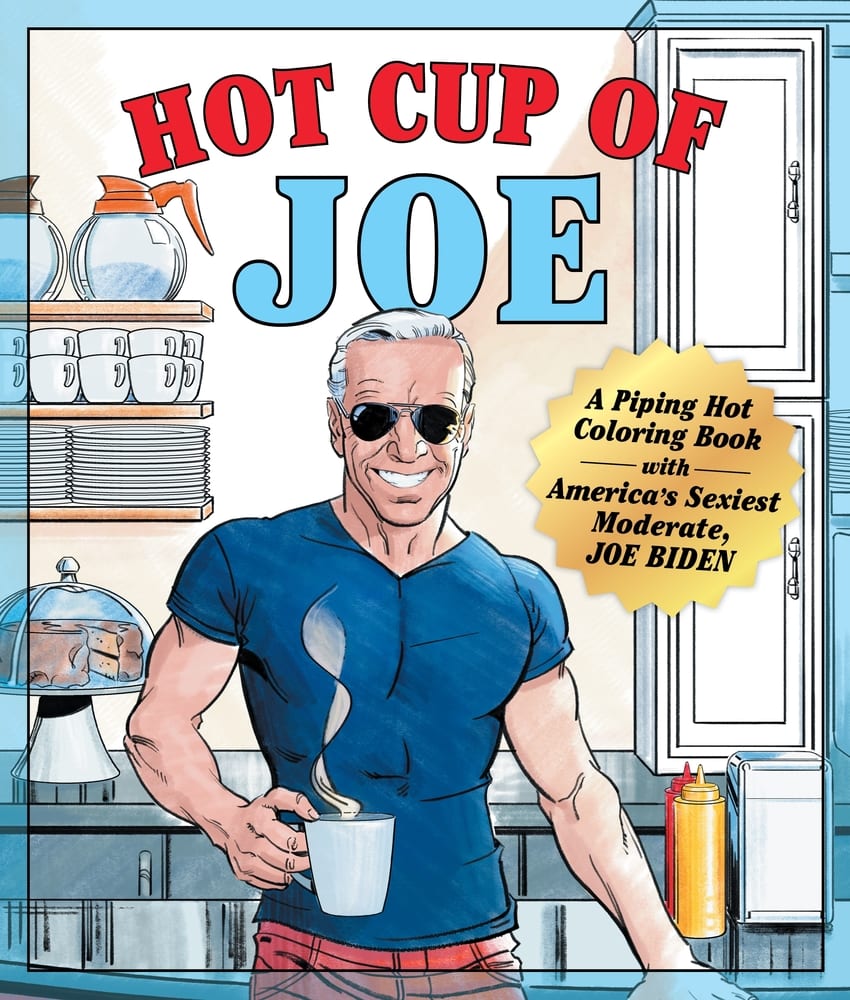
* No need to wait — the Joe Biden coloring book was published six years ago. Its cover image and subtitle look even more ironic now that we’ve survived the “moderate” Biden (p)residency than they did back in the summer of 2020:
THAT’S WHAT XI SAID!
WIRED is now what SPORTS ILLUSTRATED would be like if it argued sports should be banned because they’re unfair pic.twitter.com/AcuXWxLSFC
The picture was so different, so audacious, so avant-garde in 1941 that calling it “groundbreaking” understates the case. And because so much of filmmaking since has descended from it—or from films that themselves descended from it—it is easy now to miss the treasure hiding in plain sight. What once looked revolutionary has, by sheer force of influence, become part of the cinematic lexicon.
That is not Kane’s burden alone: it happens to every masterpiece that overturns the furniture, which the protagonist does quite literally near the end of the film.
Other filmmakers take what it did and make pieces of it their own. Then another generation borrows from them. Eventually the once-startling thing no longer looks startling at all.
It just looks like how movies are made. We still recognize the language. We do not always remember who taught us to speak it.
To appreciate just how transformative Citizen Kane was, it helps to compare it not to the films that came after it, but to the great classics that came just before.
Think of The Wizard of Oz. Think of Gone with the Wind. Think of The Philadelphia Story. These are not minor pictures, nor am I interested in diminishing them. They are classics for a reason. But place Citizen Kane beside them, and the difference becomes unmistakable.
Through that—wait for it—lens, you can see it almost immediately: in the use of light and shadow, in the use of sound and echo, in the startling deployment of deep focus, in the low and high angles and cavernous interiors, and in the determination to use the entire frame rather than treating the camera as a mere recording device.
Citizen Kane does not feel like a polished studio picture pushed to a slightly higher level. It feels like somebody came in and changed the language of cinema.
“Does Citizen Kane live up to the hype? Of course not—not eighty-five years later, at least. But that is precisely the point.” Actually, if there was any way to look at the film through the eyes of somebody who was going to the movies in 1941, rather than as someone who has seen innumerable movies made in the decades since which have stolen its tricks, it really does. (I watched it last week on the big screen in Arlington, TX.) Welles and his creative team, especially screenwriter Herman J. Mankiewicz, cinematographer Gregg Toland, and editor Robert Wise, created a variety of techniques to radically change how movies were told. In the 1930s, Hollywood movies were built around the microphone, not the camera.
After The Jazz Singer in 1929, movies had to be talkies, and that meant everything was subservient to recording dialogue. The actors had to speak loudly, and not overlap each other’s lines, and a rather static cutting style evolved that was built around long shots, medium shots, and closeups. Kane replaced this with deep focus photography, longer takes, a moving camera, and carefully planned overlapping dialogue. Kane also made extensive use of the optical printer to glide seamlessly from exterior miniatures and matte paintings into scenes.
Rather than telling its story linearly, Kane relied on a series of flashbacks, each written and performed based on the tone of the person telling the story of that segment of Charles Kane’s life, which would be ripped off by no less than Stanley Kubrick in The Killing, and Quentin Tarantino in Pulp Fiction. The optical printer was used to create the huge climbing shot in the opera house from Susan Alexander’s florid performance to the stagehand high above who hold his nose in response. That shot would be emulated by Tim Burton in his Batman movies. The vast warehouse at the end of the film containing Kane’s lifetime of possessions would later contain the Ark of the Covenant at the end of Raiders of the Lost Ark.
Citizen Kane is a film that Hollywood has endlessly ripped off. If there’s any chance of going into the theater and seeing it with fresh eyes, you will be astounded at the movie. But in any case, if there’s any chance of seeing it on a big screen near you, definitely go.
InstaPundit is a participant in the Amazon Services LLC Associates Program, an affiliate advertising program designed to provide a
means for sites to earn advertising fees by advertising and linking to Amazon.com.