
MADE IN THE USA: Grass Fed Colostrum Powder, Unflavored Bovine Colostrum. #CommissionEarned
Archive for 2025
April 13, 2025
NOBODY TRUSTS YOU GUYS, SIT DOWN: WHO working group makes progress on pandemic preparedness plan.
“THE OBJECT OF POWER IS POWER.” Liberal Canadian PM Mark Carney Runs on Banning Free Speech if Elected Canadian Prime Minister (Video).
READER FAVORITE: COOFANDY Men’s Casual Henley Shirt. #CommissionEarned
THEY’VE BEEN LUKEWARM ON THIS STUFF: It’s Time for the Supreme Court to Define ‘Proximate Cause’ in Firearm Advertising Liability Claims.
As I’ve noted, the judiciary suffers from a lot of built-in class bias.
IT’S NOT LIKE THEY CANCELLED PEOPLE FOR SAYING POSITIVE THINGS ABOUT COLONIALISM OR SOMETHING: UC free speech conference decries Trump admin’s ‘destructive effort to attack’ university research.
LIGHTNING DEAL: Men’s Casual Shorts 7″ Lightweight Golf Shorts. #CommissionEarned
I LOVE A HERO: And so does the Carnegie Hero Fund. The Fund, founded by Andrew Carnegie, “awards the Carnegie Medal to individuals in the United States and Canada who risk death or serious physical injury to an extraordinary degree saving or attempting to save the lives of others.”
Thank you, Andrew Carnegie for helping to foster a culture where heroism is valued. But most of all, thank you to those individuals (yes, they are mostly men, but there was woman among this group and a boy) who instinctively came to the rescue of their fellow human being. God bless you (and, to the men among you, God bless your toxic masculinity).
HMM: Alex Berenson: A scientist offers a simple, fascinating theory why mRNA jabs may have caused diffuse problems in so many people. “Bench scientists in academia and at the mRNA companies can be talking aggressively to each other about how to develop and improve this still-novel biotechnology, even as the scientific establishment circles the wagons against outside questioners.”
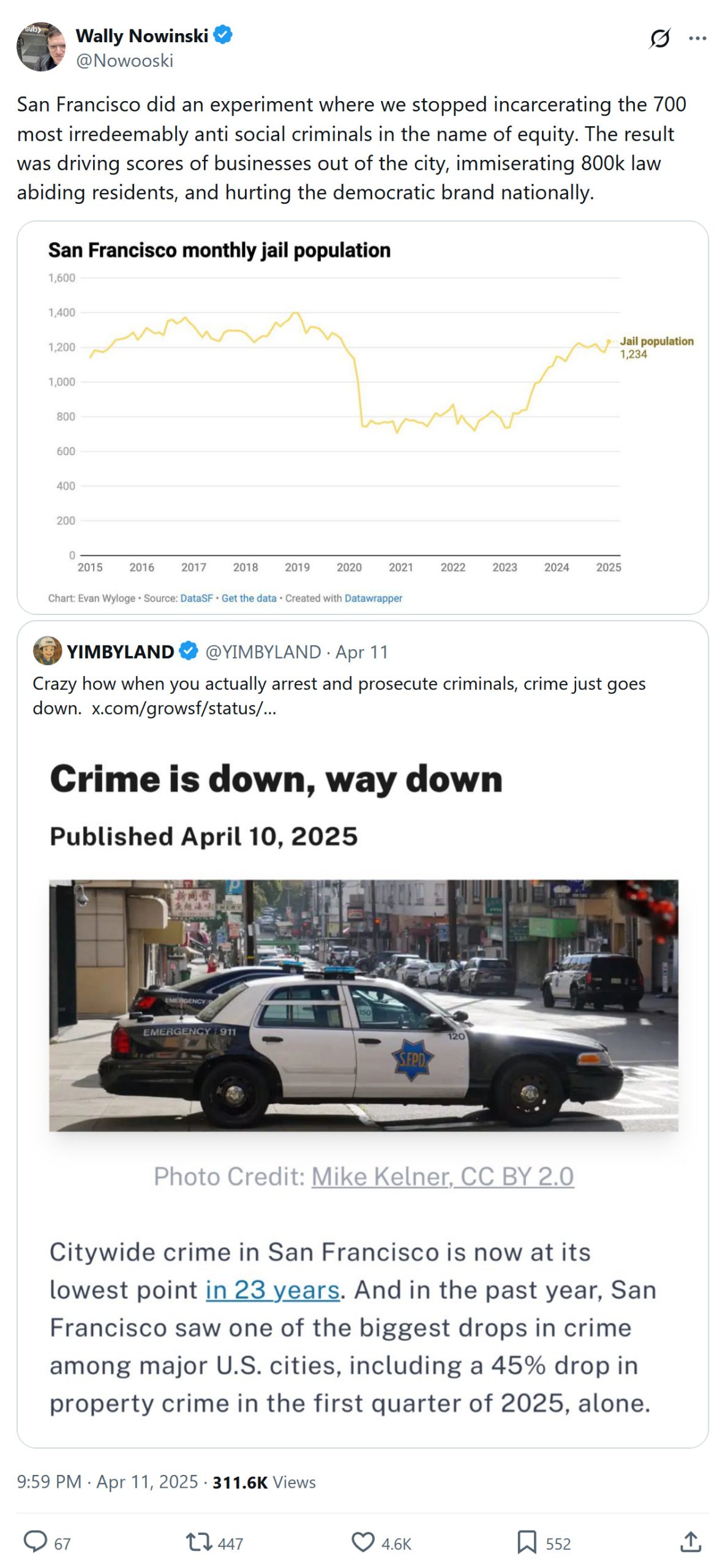
Fox Butterfield, call your office!
“The Butterfield Effect” is named in honor of ace New York Times crime reporter Fox Butterfield, the intrepid analyst responsible for such brilliantly headlined stories as “More Inmates, Despite Drop In Crime,” and “Number in Prison Grows Despite Crime Reduction,” not to mention the poetic 1997 header, “Crime Keeps on Falling, but Prisons Keep on Filling.”
Mr. Butterfield is truly perplexed at what he calls the “paradox” of more criminals in prison coinciding with less crime in neighborhoods. An observation that might appear obvious to an 8th grader (crooks + jail = fewer crimes) is simply beyond his grasp. Butterfield of the Times is the poster boy for the greatest conundrum facing the American Left today: How do you explain to people who just don’t get it that the problem is they just don’t get it?
Michael Graham wrote that in 2004, likely not anticipating how the entire establishment left would fall prey to the Butterfield Effect in 2020.
HERITABLE CHARACTERISTICS: It’s Not Who You Know, It’s Who You Are.
Children resemble their parents. When the resemblance is physical, we usually think it’s funny or cute. But when the resemblance is financial, it’s an Issue. Non-economists debate the merits of the cynic’s maxim that, “It’s not what you know, it’s who you know.” Economists debate the magnitude of the intergenerational income correlation.
During the past two weeks, I’ve been reading all the articles I can find on this subject. Here’s my three stage summary:
Stage 1 (1970s-80s): The intergenerational income correlation is low, about .2. This shows that capitalism is pretty fair – while many people see a class society where rich people give their kids a massive edge in life, the reality is that people succeed largely on their merits.
Stage 2 (1980s-1990s): Previous researchers underestimated the intergenerational income correlation by failing to correct for year-to-year fluctuations. The true correlation is much higher, about .4, showing that we live in an unfair class society.
Stage 3: (late 1990s – today): The intergenerational income correlation is indeed quite high. But twin and adoption studies show that most or all of this correlation stems from heredity. The reason why kids from rich families do well isn’t that mom and dad buy their way through life. The reason, rather, is that rich families have genes that cause financial success, and pass these genes on to their kids. (Casual consumers of this literature often get confused by the fact that the effect of IQ is far too small to explain the intergenerational income correlation. The key thing to remember is that there is a lot more to genetics and success than IQ).
Notice: In Stage 1 and Stage 2 , the normative subtext was quite clear. Capitalism is pretty fair! No, it’s not! On my reading, though, most researchers have moved from Stage 2 to Stage 3 without noticing that their normative subtext is more pro-capitalist than Stage 1 even imagined.
But if the science doesn’t support the Narrative, is it even “the science?”
April 12, 2025
HERE’S ANOTHER PIC OF GOV. WHITMER IN THE OVAL OFFICE WITH TRUMP (At Least We Think That’s Her):
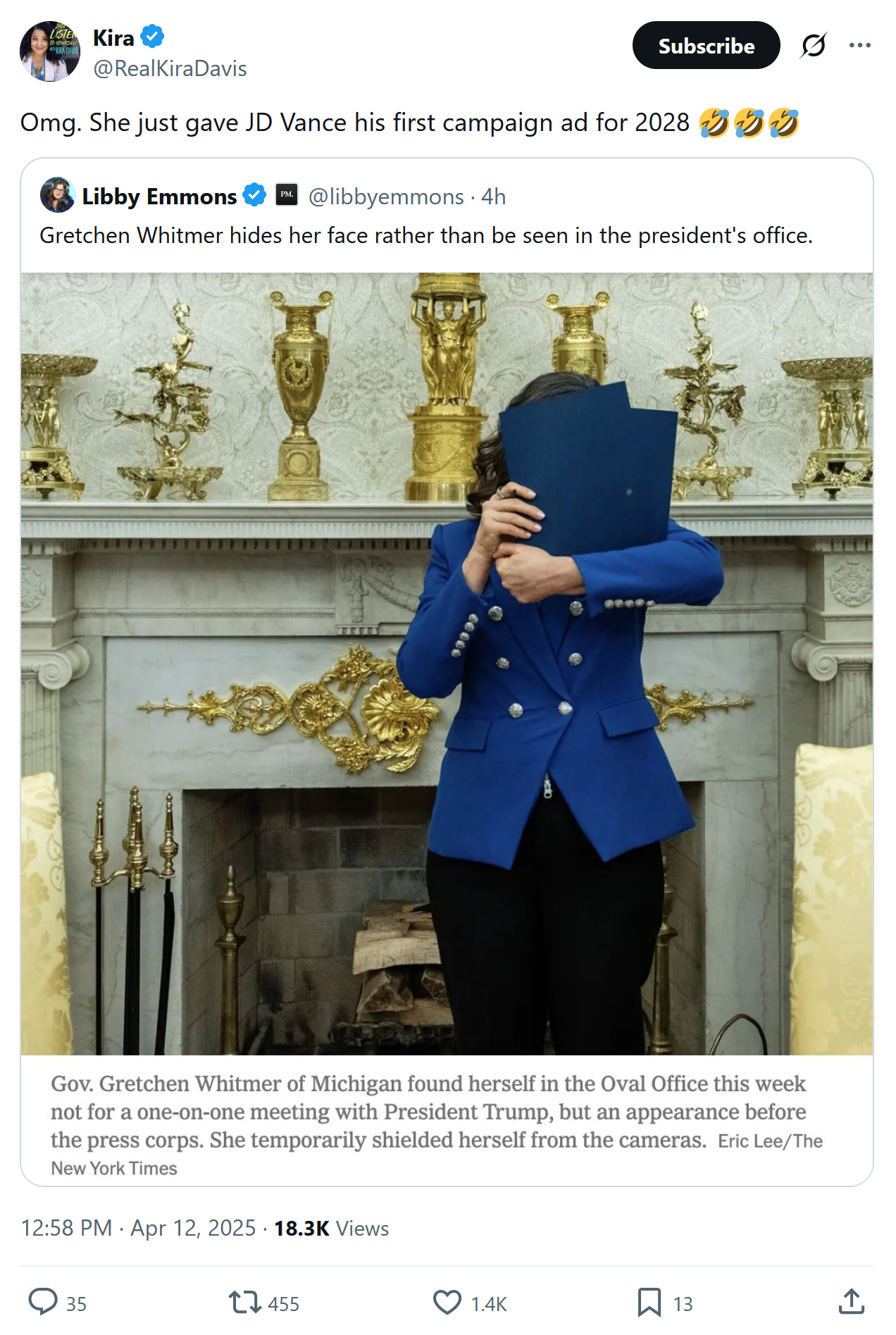
To boldly go where Monty Python has gone before:
UPDATE: And to boldly go where Waldo has gone before:

OPEN THREAD: Party like it’s Saturday night.
ONE DAY WE’LL HAVE HELIUM-3 RECOVERY STATIONS IN CLOSE ORBIT AROUND THE SUN: The sun just leaked a huge amount of helium-3 — the rare isotope scientists want to harvest on the moon.
SHOW THEM THEY’RE OUTNUMBERED:
Look at what happened when terror supporters tried to have a protest at Ole Miss.
American patriots will never be intimidated.
— Eyal Yakoby (@EYakoby) April 11, 2025
IT RUINS EVERYTHING IT TOUCHES: How DEI Left Service Academies In A ‘State Of Decay,’ And How Trump Can Fix It.
WHERE WE ARE:
I think the establishment is stupid enough to throw all the rules out the window to get Trump and then will be stunned to find that it has no rules left to protect itself https://t.co/C7AWlt05EV
— Kurt Schlichter (@KurtSchlichter) April 12, 2025
STAY SAFE: GP BackGrip PRO, Headrest Car Passenger Hand Grip for Truck & Car. #CommissionEarned
In 1941, W.H. Auden listed nearly 6,000 pages of required reading for an undergraduate course at the University of Michigan. In 2018, the historian Wilfred McClay tried recreating that course at Hillsdale College. It quickly became one of the school’s most popular classes, wildly oversubscribed. The undergraduates even printed up T-shirts that read, “I Survived the Auden Course!”
Perhaps that’s proof that students rise to the level of expectations. If universities demand reading, they will get it. But such fire-hose courses as Auden’s demonstrate something more. College graduates used to have stories of the trenches they loved to tell—stories about the backbreaking organic-chemistry course that decided medical-school admissions. The required engineering course on dynamics. The ridiculous French literature survey course that demanded studying everything from “Song of Roland” to “The Stranger.”
The experiment this fall at the University of Colorado will be to learn whether students respond with that kind of camaraderie and the grumbling pride of having to do strenuous intellectual work. This isn’t the end of reading but the beginning—giving students a frame into which they can place the books they go on to read as adults, because the art form of the novel matters, profoundly shaping modern civilization. The test will be to see whether students can read, even if thus far they don’t.
Stay tuned.
WE CAN BE HEROES, IF JUST FOR ONE PROMPT: What Is the ChatGPT action figure prompt?
Action figures — small, poseable dolls often modeled after superheroes or movie characters – are popular collectibles, especially for fans of Marvel and DC. With this new tool, you’re no longer limited to fictional icons. Now, you can see what your own collectible figure might look like.
How to make your AI action figureGo to the ChatGPT website or app.
Upload your photo, then enter the following prompt:
“Use this photo of me to create an action figure of myself in a blister pack, in the style like a premium collectible toy. The figure should be standing up and have a relaxed, friendly smile. The blister pack should have a header with the text ‘[ACTION FIGURE NAME]’ in large letters and a subheading of ‘[SUBHEADING]’ below it. Include accessories in compartments to the side of the figure: [LIST OF ACCESSORIES].”
Not surprisingly, quite a few pundits had fun with this new feature last night, such as these from Gabriella Hoffman and Karol Markowicz:
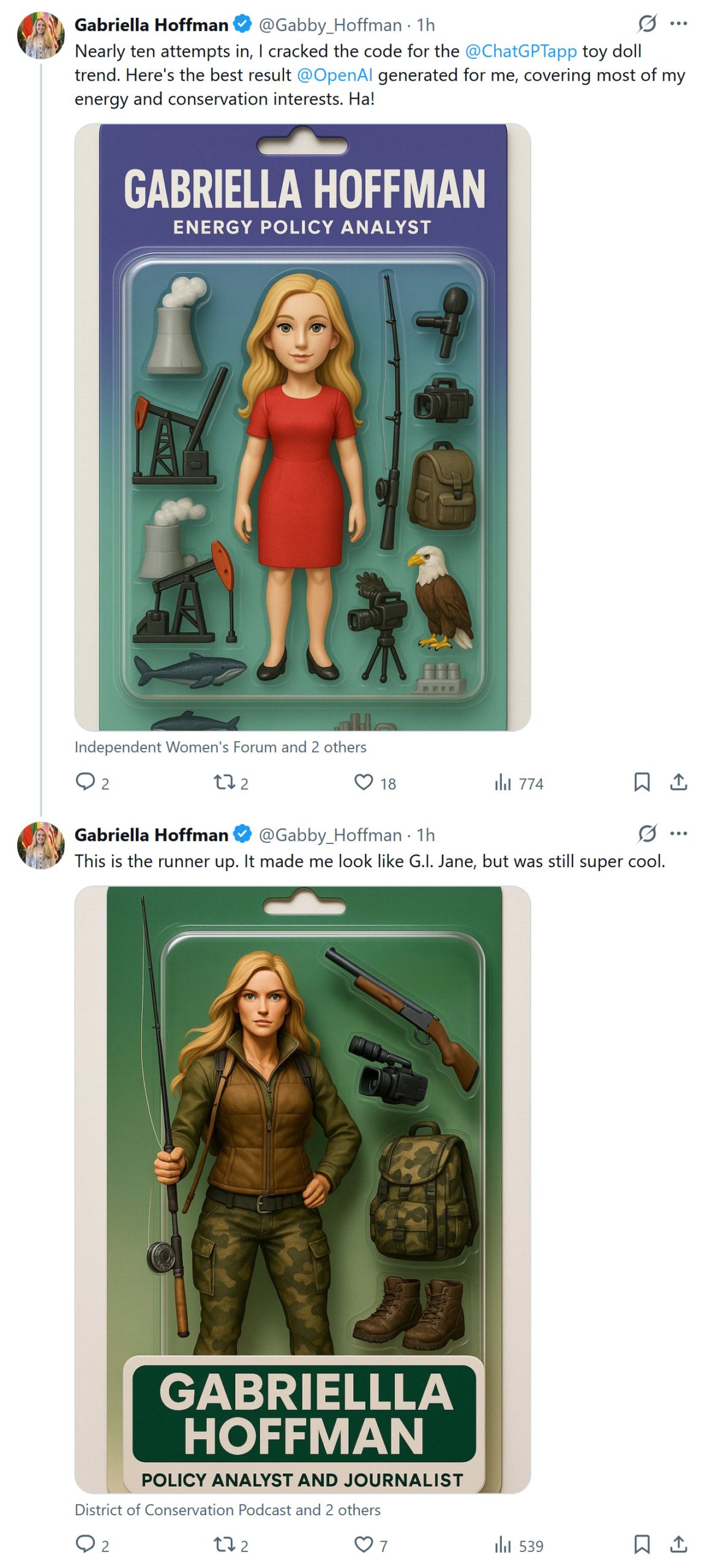

(Yes, of course I tried it as well. But my ChatGPT action figure left me thinking that I had a bright future in Hollywood as J.K. Simmons’ stand-in.)
Also not surprisingly, while simultaneously generating loads of action figure versions of themselves, some lefty Websites are tut-tutting this new feature: The action figure trend is the latest way people are misusing the power of AI – and I wish I could stop doing it.
This is all good fun, but there are concerns.
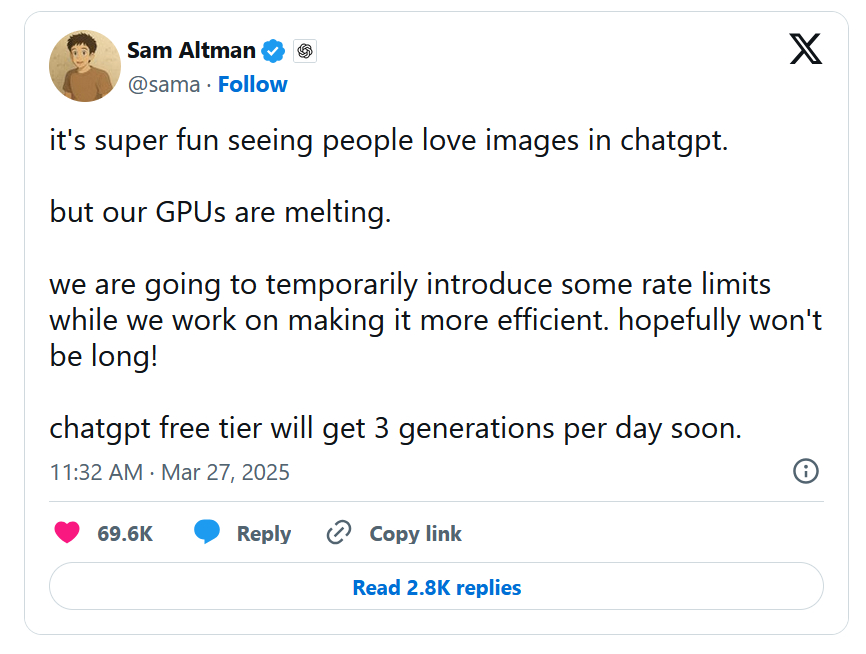
First of all, AI image generation is not without cost. Sure, there’s the price of a ChatGPT Plus membership (around $20 / £16 / AU$30 a month), although you can generate around three images a day on the free tier, depending on current demand. Perhaps more importantly, there’s the cost of AI models like 4o.
A Queens University Library report claims, “Artificial Intelligence models consume an enormous amount of water and emit large amounts of carbon in their production, training, operation, and maintenance.” Another Cornell University study calls out AI’s growing freshwater use footprint, claiming “training the GPT-3 language model in Microsoft‘s state-of-the-art U.S. data centers can directly evaporate 700,000 liters of clean freshwater.”
If you don’t think these AI trends and the memes they spawn are attracting wide use, stressing the system, and possibly eating natural resources, just look at OpenAI CEO Sam Altman’s comments.
We have a joke in my house that every time we create one of these AI memes, it kills a tree. That’s hyperbole, of course, but it’s safe to say that AI content generation is not without costs, and perhaps we should be thinking about it and using it differently[.]
Self-styled environmentalists are burning Teslas on the eve of the 55th anniversary of “Earth Day,” so I’m not sure that’s much of an argument in 2025.
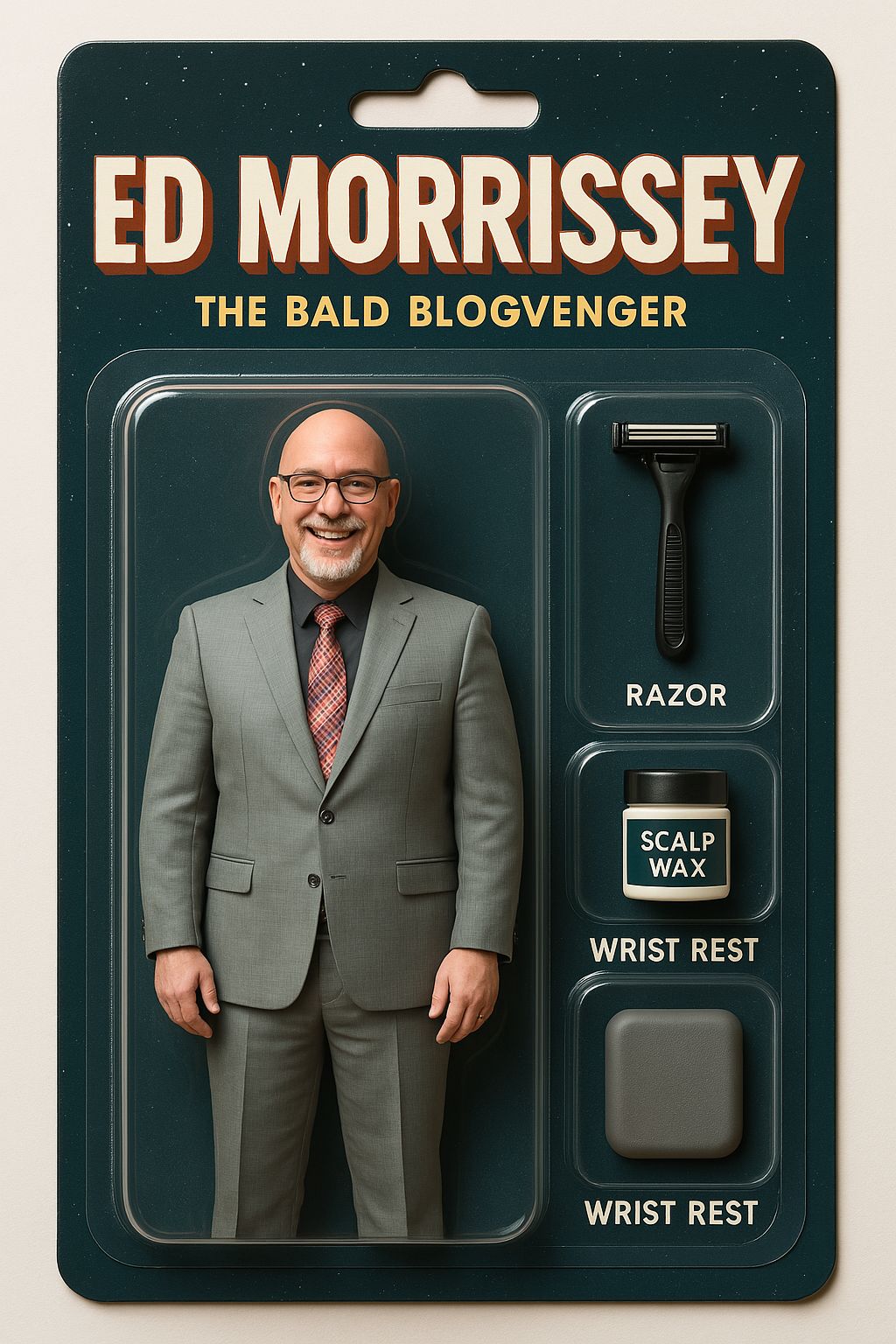
UPDATE: Ed Morrissey of Hot Air emailed me his attempt at Mego-fication:
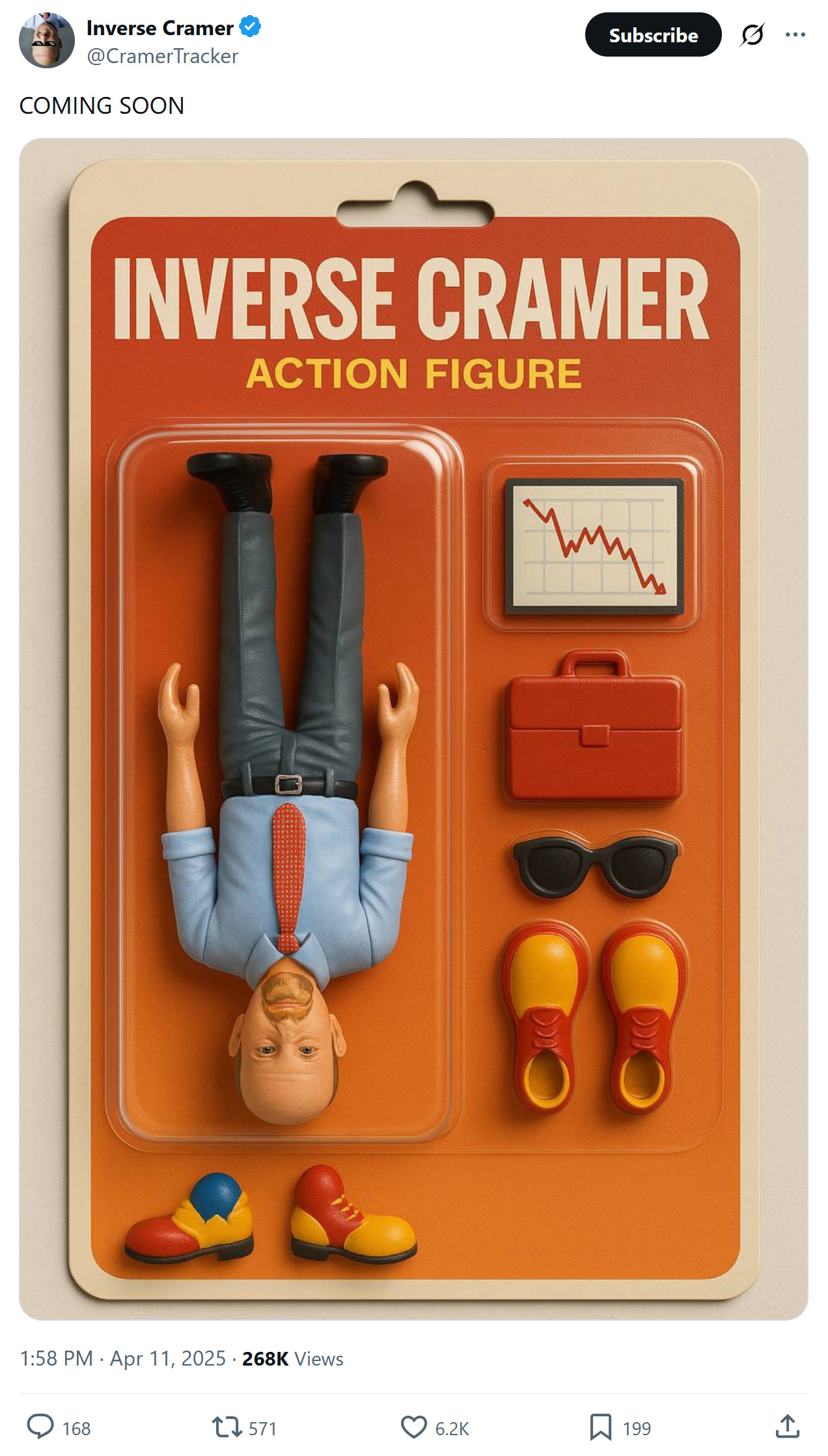
Reverse Jim Cramer tweeted his own appropriately-styled action figure:
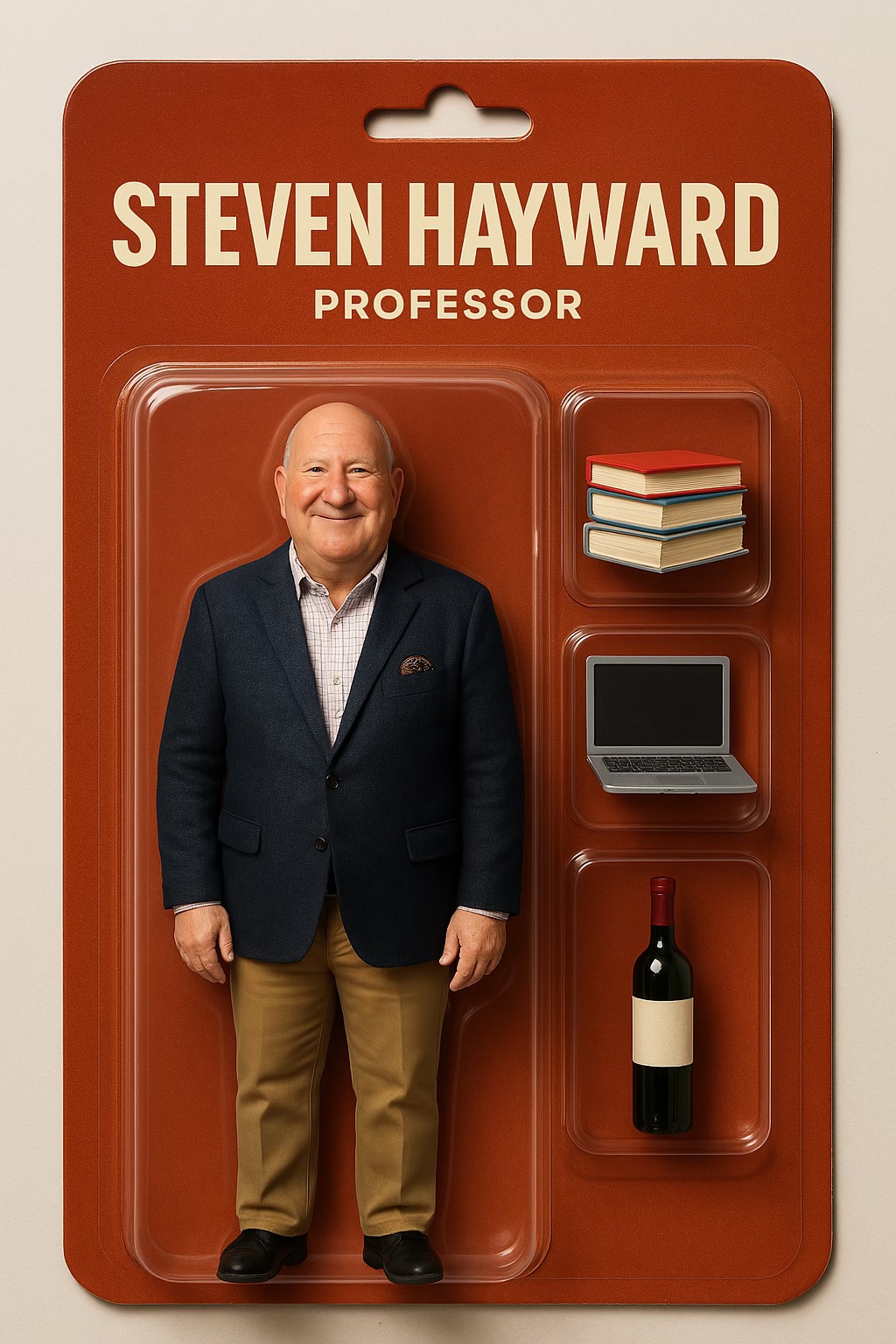
And for completion sake, here’s my attempt from last night:

Like I said above, not sure what’s going on with the J.K. Simmons-ing of my chin, but it was a fun first effort. Chat GPT spat that image out in less than a minute; creating this sort of thing, with its fake blister-pack imagery, die-cut style background, the font work, and slightly plastic-y appearance of the “action figure” would have taken at least a half-hour to an hour of donkeywork in Photoshop.
UPDATE: Seen on Facebook:
ZOOM: Tested: 2025 Audi RS7 Performance Absolutely Lives Up to Its Name.
Even quicker than the one I reviewed a decade ago.