Archive for 2020

MATTHEW CONTINETTI: Trump Calls the Ayatollah’s Bluff: And scores a victory against terrorism.

UPDATE: John Ringo emails:

People keep missing something important about the airstrikes that ‘killed 25 militants’.

The militants were collateral damage. The target was multiple ‘hidden’ missile magazines for rather expensive Iranian SCUDs threatening Israel.

The strike cost the Iranians a shit ton of hard currency. It also pointed out we know where they hide stuff and can take out the “threat” at leisure.

And trying to storm the (fortress) embassy in Iraq was the best they could do.

Yeah, my lefty friends on Facebook seem to think this is Trump wagging the dog because his back is to the wall over impeachment, and that it will provoke Iran to suddenly not like us. In fact this is Trump demonstrating that impeachment is irrelevant, and that Iran, which has always hated us, is weak now.

PAST PERFORMANCE IS NO GUARANTEE OF FUTURE RESULTS:

Shot: “I was tempted to write an entire post explaining how MSNBC has maneuvered itself into its current bizarre predicament as The Bomb Syria Now Network…This morning, I woke up early and caught the 4 a.m. replay of Rachel Maddow, and she was so rabidly pro-war you half-expected her to break out into the ‘Patton’ monologue.”

—“Could the Creepy Orwellian Vibe at MSNBC Possibly Get Any Creepier?” Stacy McCain, September 6, 2013.

Chaser: MSNBC Distraught U.S. Strike Killed Head of Iranian Quds Force.

NewsBusters, last night.

FLASHBACK: Obama Strikes a Deal–With Qassem Suleimani. “Obama likes Suleimani, and admires his work. As the president reportedly told a group of Arab officials in May, the Arabs ‘need to learn from Iran’s example.'”

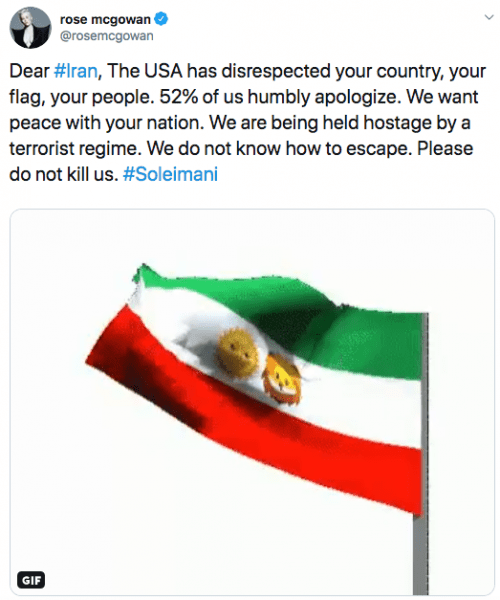
THE MENTALLY ILL ON TWITTER:

HONESTLY, IT SEEMS LIKE WHATSAPP DID THE RIGHT THING HERE. NOBODY TOLD THEM THIS WAS A LEGIT SPYING OPERATION. Police Tracked a Terror Suspect—Until His Phone Went Dark After a Facebook Warning.

A team of European law-enforcement officials was hot on the trail of a potential terror plot in October, fearing an attack during Christmas season, when their keyhole into a suspect’s phone went dark.

WhatsApp, Facebook Inc. ’s popular messaging tool, had just notified about 1,400 users—among them the suspected terrorist—that their phones had been hacked by an “advanced cyber actor.” An elite surveillance team was using spyware from NSO Group, an Israeli company, to track the suspect, according to a law-enforcement official overseeing the investigation.

A judge in the Western European country had authorized investigators to deploy all means available to get into the suspect’s phone, for which the team used its government’s existing contract with NSO. The country’s use of NSO’s spyware wasn’t known to Facebook. NSO licenses its spyware to government clients, who use it to hack targets.

On Oct. 29, Facebook filed suit against NSO—which has been enmeshed in controversy after governments used its technology to spy on dissidents—in federal court in California, seeking unspecified financial penalties over NSO’s alleged hacking of WhatsApp software. It also sought an injunction prohibiting NSO from accessing Facebook and WhatsApp’s computer systems.

NSO said it is vigorously defending itself against the lawsuit, without elaborating.

Technology companies such as Facebook and Apple Inc. over recent years have strengthened the security of their systems to the point where even the tech companies themselves can’t provide law-enforcement agencies with messages created on their own systems.

Private companies, meanwhile, have stepped in to fill the gap by devising new ways of extracting data from computers and mobile devices. Facebook said in the lawsuit that spyware was installed by hacking WhatsApp’s video-calling function.

The thwarted terror investigation, as described by the law-enforcement official, spotlights an increasingly common clash of concerns over public security and personal privacy.

Governments want encryption backdoors, but nobody can trust them to use those honestly, or to keep them from being exploited by bad actors. Governments can’t even protect their own networks and data.

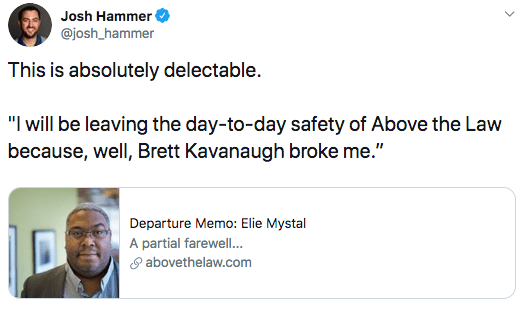
WHAT IS BEST IN LIFE, BRETT?

THE DEATH OF EXPERTISE: Trump economy defies critics – 2019 another year of the ‘experts’ getting it all wrong.

In January, the uber-liberal Huffington Post published a typically baseless piece titled “4 Signs Another Recession Is Coming ― And What It Means For You.” Vox published a similar fear-mongering prediction over the summer, arguing that Wall Street “is at a point where it can’t — or won’t — ignore President Donald Trump’s trade antics and Twitter tirades like it used to.”

And who could forget some of the most recent warnings that slam Trump’s trade policy, such as Investor’s Business Daily’s headline: “Stock Market Reaction To Tariffs: Wall Street Has Seen This Before; The End Is Not Good.”

Despite the doom and gloom, as 2019 came to an end, the president inched ever-closer to a revolutionary trade deal with China, completing negotiations on what has been called phase one of that agreement. The Trump administration also successfully campaigned to get the U.S.-Mexico-Canada-Agreement approved by the Democrat-controlled House of Representatives, further instilling confidence and optimism in entrepreneurs that the ongoing economic renaissance is here to stay.

For me the biggest tell on how seriously the Democrats took their own impeachment effort was when they gave Trump everything he wanted on trade and on defense, as though he was going to remain POTUS for a good, long while.

JOHN KLEIN: The Creation of a U.S. Space Force: It’s Only the End of the Beginning.

The U.S. Space Force will need to develop a service ethos and distinct operational styles of warfare more suited for considering conflict within the space domain. . . .

Creating a Space Force is a dramatic step for addressing great-power competition in space. But while Space Force discussions commonly focus on the need to address today’s emerging global and counter-space threats, the true value of the Space Force will come later, as the understanding of space’s character and development of distinct culture and operational style unleash the full promise of military innovation.

Future Space Force strategists will need to acknowledge that space warfare has a character differing from conflict on land, at sea, or in the air.

At a high level, the essentials will remain the same, but yes.