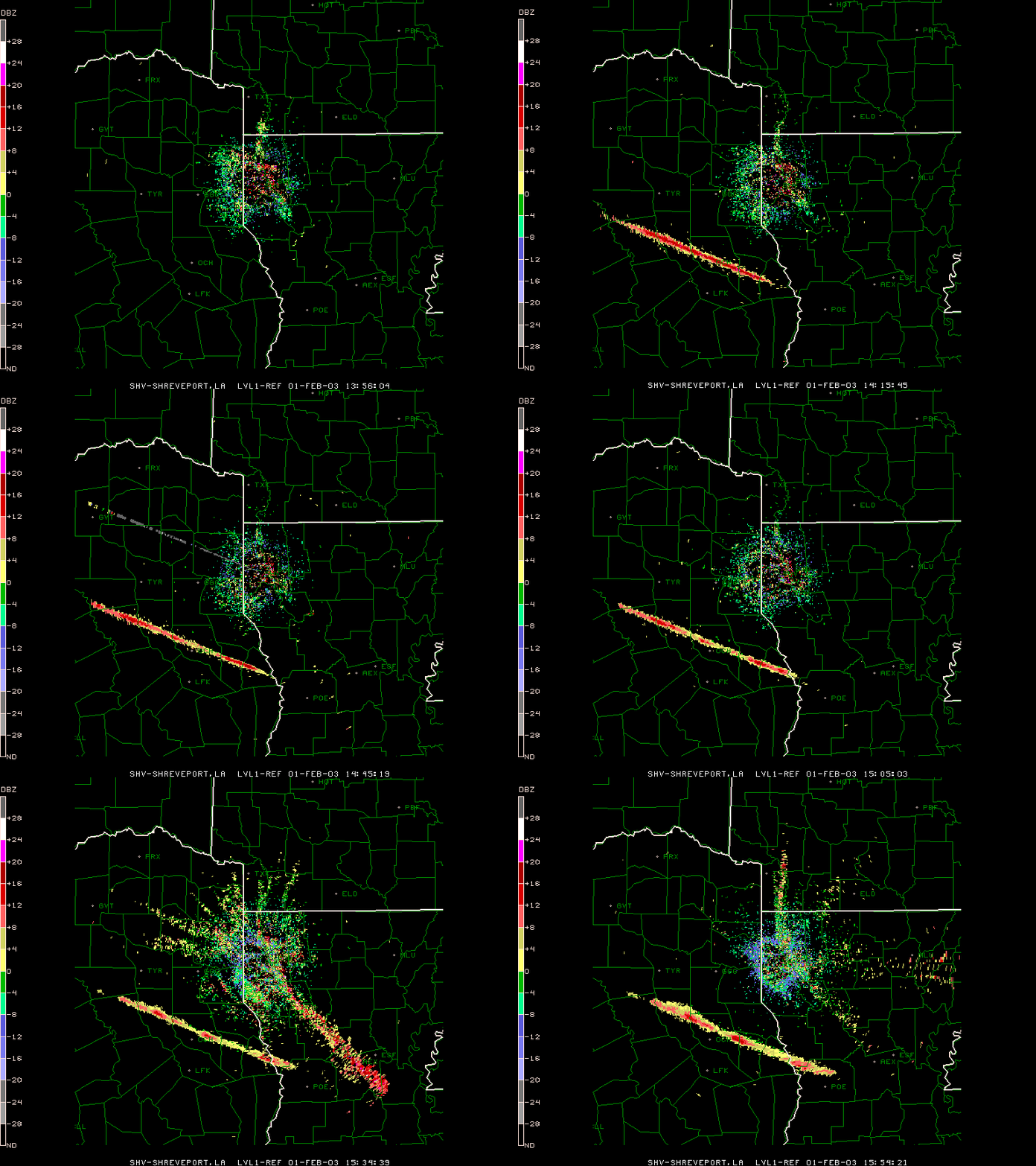
MORE ON THOSE RADAR IMAGES: Reader Timothy Lang emails:
Research scientist at Colorado State University here. My specialization is radar meteorology. You expressed hope that the NEXRAD loops of the space shuttle plume would be saved. NOAA is actually doing this, with a Lake Charles radar loop of the debris cloud specifically at: Link.
There is a general archive of NEXRAD imagery at the National Center for Atmospheric Research. The following web page has data for the past month or so, from every radar:Link.
The debris cloud was tracked by multiple NEXRADs over a period of 6 or more hours. The backscatter signal from the debris was equivalent to a very weak rainstorm, but showed up clearly given the sunny weather at the time. Tough to speculate about exactly what kind of particles we’re seeing in these images, but I would suspect small (< 1 mm diameter) with slow fall speeds, as it took them a few hours to settle out. The radar reflectivity factor goes as the sixth power of particle diameter, so only a small handful of the largest particles will give the kind of signal we saw.
The radars would have a hard time picking up the big pieces that fell quickly to the ground, due to the slow scanning schemes employed in radar meteorology (as opposed to, say, military scanning). You have to be lucky to have the radar looking at the right angle at the right moment for fast-moving targets. But small stuff that takes a long time to fall out would be no problem to see.
Yes. Some people have told me that the big orange smear is probably an ionization trail, but others have told me that it’s small debris, and I think that’s right. If you look at this loop there’s a star-shaped pattern in the very first frame that I think is caused by bigger fragments, but I’m not sure. It’s not ground clutter because it changes. It appears in this loop too.