
THEY ARE ALL LIERS. IF THEIR LIPS ARE MOVING, THEY’RE LYING: Plagiarist Biden Lies Through Update On Vaccinations.
Author Archive: Sarah Hoyt
March 20, 2021
NAH. IT ATE BIDEN’S LUNCH. THAT’S NOT HARD. HE’S A POTTED PLANT: At Alaska Summit, China Eats Our Lunch.
DEMOCRAT OPERATIVES WITH BYLINES: Media Firefighters Cover For Biden’s Triple Trip.
A LOT OF CREATIVE PEOPLE HAVE BEEN WRESTLING WITH DEPRESSION: In the face of the last year of covidiocy a lot of my friends — not all writers, but most of them in creative professions — have been having trouble working, concentrating. Part of this, of course is hubris. We keep feeling if we had shouted louder, done more, if we could just have explained where this was headed more clearly, none of this would have happened.
This is stupid, of course. As I’ve found in the last year, there is a limit to what you can do, see you things ever so clearly, in the face of irrational mob panic stoked by experienced demagogues.
A couple of days ago a friend pointed me at this post by my friend Robert Bidinotto (link takes you to the first book of his thriller series.) I don’t know why Facebook didn’t show me this post, except the site is the most counterproductive thing ever, and I only stay on it till most of my fans migrate. But I’m glad I was pointed at Robert’s post.
Yes, I know the post is long but he’s right. And we all need to listen to him. And maybe find our heart and our vision again. All we can do is all we can do. But we need to keep doing it.
A BRIEF, OPTIMISTIC THOUGHT ABOUT CULTURAL CHANGE.
I have heard a great deal of despair lately about the state of our culture. Reading self-defined “cultural conservatives” (such as Rod Dreher) wailing that “all is lost,” it is easy to give in to pessimism.Such pessimism seems warranted if you define the cultural battlefield in terms of *existing institutions.* After all, evidence of decadence and decline is pervasive within our political, economic, educational, entertainment, and social institutions. Most have become captives or accomplices of the left-nihilists.But is that really the battlefield?History reveals to me different lessons. Such as: how a Renaissance and Enlightenment can emerge from the tribalism and mysticism of the Dark Ages, in which all institutions were hopelessly corrupt and coercive. Or how America itself could emerge from the historic swamp of universal despotism.We can learn from our enemies, too. The so-called “Frankfurt School” started as a mere school of thought — a bunch of Marxist professors in Germany. Ditto, the Fabian Socialists in the UK. We should study how they accomplished what they did, and take notes.We also should take lessons from what the military calls “asymmetrical warfare”: how a small group of insurgents can fight a much larger, better equipped and supplied force to a stalemate — and even eventually beat them. (Study George Washington and Francis Marion, for examples.) No, I’m not being literal; I’m arguing that the military analogy applies to the cultural battlefield, too: the battle over ideas and values.But creating new ideas, arguments, perspectives, and inspiring *visions* is not a numbers game. The creators of new ideas are always few, and usually solitary. Yet those few can eventually serve as navigators for an entire society. It was that truth that led Percy Shelley to say that “Poets are the unacknowledged legislators of the world.” The same can be said of an influential religious leader, philosopher, or narrative artist: think Jesus, Aristotle, Homer. Throughout history, these visionaries have been the de facto “asymmetrical culture warriors” of the world.Today, would-be asymmetrical culture warriors have access to technology, even at the individual level, that those earlier purveyors of ideas and values couldn’t have dreamed of — technological innovations that the military would call “force multipliers.” So, rather than gnash our teeth at the reach of mainstream- and social-media giants, or the influence of big corporations, schools, and governmental bodies, we “outsiders” can use technology to “hit them where they ain’t” — to spread our ideas and values in new forms, among receptive target audiences
This is way too big a topic for a Facebook post. But those of you with individualist perspectives in our collectivist era — especially, those of you in the storytelling arts — ought to think creatively about this. Above all, remember the unstoppable power of a captivating idea or perspective — and the fact that it takes only a single creative visionary to give it life in the world.
March 19, 2021
AN ANTHOLOGY EDITED BY ROB HOWELL (SPOILER, I’M IN IT. SO IS LARRY CORREIA AND DAVID WEBER AND…): Songs of Valor.

It is a time of high adventure! A time for heroes to say “No!” to the evils that will befall their families and friends if they don’t rise to the task at hand…even if they don’t want to! If they won’t take up arms and spells on behalf of their people, civilization will fall.
Fifteen exceptional authors have spun tales of reluctant heroes—people often like you and me, who didn’t think they were worthy, needed, or even “the right one for the job.” Sometimes all they have going for them is that they’re the wrong person at the wrong time. When there’s no one else, though, a hero must do what’s necessary, whether that’s fighting demons, the undead, or an unconquerable enemy.
Songs of Valor focuses on heroes rising to the challenge presented them. An untrained human facing an ancient dragon. A necromancer fighting a demon in the land of the elves. A dragon rider well past her prime coming back to protect the ones she loves. An over-the-hill fighter who does what he must to stem the tide of evil.
Inside are fifteen incredible stories of heroes rising to the occasion. Their willingness to brave the peril, though, doesn’t guarantee their success. If their valor should fail, all indeed will be lost! Will they succeed? Step inside and find out!
SOMETIMES YOU GO A BIT INSANE: The Felinidian Theory.
THEY ACT AS THOUGH THEY HAD A MAJORITY OF THE POPULATION BEHIND THEM: Today’s blacklisted Americans: California Democrats to blacklist all conservative or religious policemen.
Of course they don’t. So this will end in tear. And blood. Lots of blood.
AS SOME OF US HAVE BEEN SCREAMING: The Sovereign Crime of Industrial Scale Vote Fraud.
SO OF COURSE THEY’RE DOING THEIR BEST TO START A WAR: There is No Biden Administration.
BECAUSE OF COURSE THEY ARE: Disqus’ De-Platforming of Frontpage.
HOW DO WE MITIGATE THE EFFECTS OF GOVERNMENTAL ILLUSIONS IMPOSED ON THE REST OF US? Welfare in the 21st century: Increasing development, reducing inequality, the impact of climate change, and the cost of climate policies.
THAT’S A FUNNY WAY OF SPELLING OBFUSCATOR: Boston University and Boston Globe to Create New Critical Race Theory Publication ‘The Emancipator’.
REALLY? I WANT CITIZENS TO WASH RED BILLY’S MOUTH OUT. WITH SOAP: De Blasio Wants Police to Scold People For Saying Things That Are Legal But “Not Appropriate”.
DAY ENDING IN Y: Biden Calls Kamala ‘President Harris’ During Media Appearance.
MEH. WHY NOT BLAME BIDEN: White House: Blame Trump For Atlanta Massage Parlor Shootings.
After all his family has shown the world that being a sex addict with morality issues is perfectly fine, if you’re a Biden. Some people learn by example.
NOT AS BAD AS FOR OURS: Illegal Immigration Bad For Home Countries, El Salvadoran President.
ALL OF US SHOULD: Rand Paul Torches Anthony Fauci’s Double Mask Theatrics.
LOOK, IT’S ALL CLASS SIGNALING: Growing number of English, writing scholars prioritize social justice, reject ‘standard’ academic English.
Up to the first World War, books that were considered high literature and won awards were the ones that had allusions to Greek and Roman myth, or dropped other historical allusions, casually, into the prose. It was a way of saying “I had an excellent education.” These days excellent education in terms of expensive colleges means Marxism Leninism, so of course awards and admiration goes to the “woke” stories that push “social justice.” It’s a way of screaming “I have an excellent education.”
BUT at least the nineteenth and early twentieth century taught people to write so they could be understood. Now? Well, I’m old enough to have taught some people who are teachers now and I can tell you, it only goes down from here.
March 18, 2021
FROM FRANK J. FLEMING: Superego.
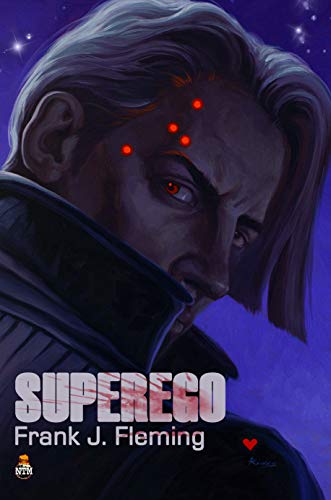
Rico is a psychopath.
That’s why his job as an intergalactic hitman for a massive criminal syndicate suits him so well. He gets to do what he does best: go planet to planet and wreak destruction. He enjoys his work.
But Rico’s latest assignment isn’t what it seems, and after inadvertently thwarting a terror attack, he finds himself playing the good guy. Stuck pretending he’s a cop, he gets paired with some lady detective who is more than a little suspicious of him. To make matters worse, he starts to have new feelings toward her, feelings he’s never felt before. Love, maybe? That’s stupid. What is he supposed to do with that?
And this job isn’t fun, as it soon spirals into secrets, betrayal, and a whole planet out to kill him. Well, it’s a little fun. Still, Rico may have finally found himself in a situation he can’t shoot his way out of.
But that doesn’t mean he won’t try.
ANYONE WHO DOESN’T SWEAR ALLEGIANCE TO THE JUNTA: Who Is Our Military’s Enemy?
Anyone who remembers our founding documents. Anyone who rejoices in being an American.
AMERICA’S PAPER OF RECORD: Exclusive Interview With President Biden’s Secret Service Agent.
(Yes, it’s the Bee.)
DON’T YOU LOVE THE TRANSPARENCY? White House Press Secretary Questioned about Biden Administration Muzzling Customs and Border Patrol, Response: “ask them”.
The Junta will tell you what they want you to to know. Shut up, comrade.
IT NEVER WORKS: Immanentize the Eschaton!
PUBLIC HEALTH, RUN BY THE GOVERNMENT IS AN OXYMORON: COVID19 update, Ides of March Edition: the Oxford/AstraZeneca fustercluck redux.
THEY MIGHT IN FACT KILL PEOPLE: Mask Mandates Do Not Save Lives.
Those who can’t tolerate them for health reasons become shut ins, which causes depression, which–
Ask me how I know!