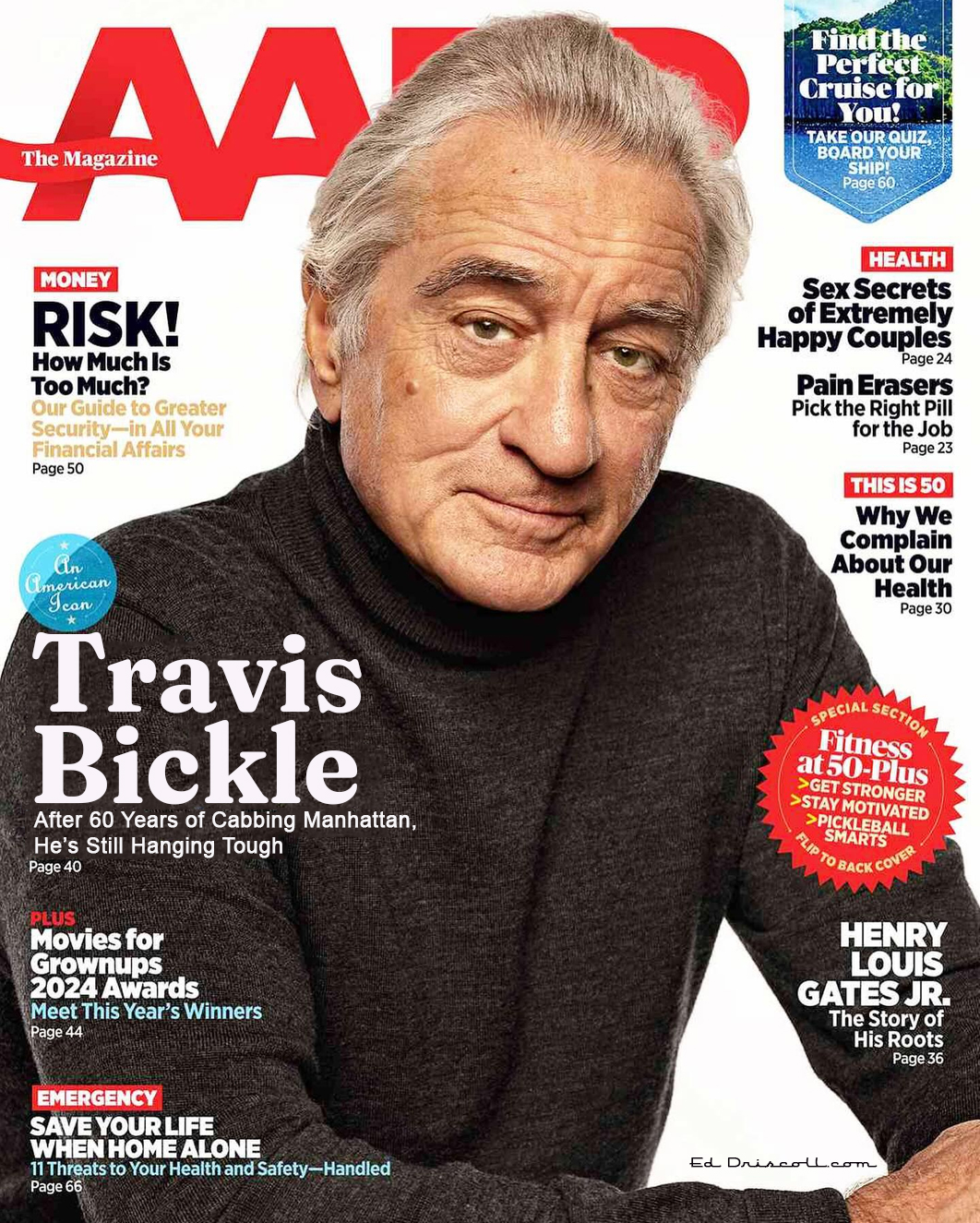
YOU TALKIN’ TO ME? Taxi drivers rarely die of Alzheimer’s — how complex mental maps and spatial reasoning protect your brain.
Taxi and ambulance drivers are less likely than workers in almost any other job to die of Alzheimer’s disease. That was the surprising result of a 2024 study examining the death certificates of nearly 9 million people in the U.S.
These findings stopped me in my tracks because those two jobs rely on the same thing as my own work: maps.
I have spent more than two decades staring at maps. Not paper maps on a wall, but digital ones with multiple layers: flood boundaries draped over census blocks, car crash hot spots plotted against road geometry, and satellite readings of rainfall stitched across river basins. Much of my work as a civil and environmental engineer is done through GIS – that is, geographic information systems. Engineers like me hold several spatial relationships in their minds at once, reasoning about where things sit relative to one another across scales ranging from a city block to a whole watershed.
I always assumed that spatial reasoning across map layers was purely professional. But that study on taxi and ambulance drivers made me wonder whether all that mental work might be doing something good to the brain.
Taxi driver brains
Of the 9 million death certificates from January 2020 to December 2022 that researchers examined, taxi and ambulance drivers had the lowest risk of dying from Alzheimer’s disease out of 443 occupations. After adjusting for age, sex, race, ethnicity and education, roughly 1 in 100 taxi and ambulance drivers died of Alzheimer’s, compared with 1 in 60 people overall.
This pattern did not extend to other driving jobs. The researchers concluded that the key to reducing the risk of Alzheimer’s was not driving itself but continuous real-time navigation: the constant work of locating yourself in space, tracking a destination and updating a mental map as conditions change. Drivers whose jobs relied on fixed or predetermined routes, like bus drivers and aircraft pilots, didn’t seem to experience a similar advantage.
I eagerly await Travis Bickle’s profile in the next issue of AARP Magazine: