BRITAIN’S FLAG WARS FLY IN THE FACE OF NATIONAL SELF-LOATHING:
To the annoyance of Tower Hamlets, Birmingham, and many other local councils, the British and English flags tend to go back up almost as quickly as they can take them down. They are being hung on lampposts, displayed out the windows of private homes, draped over motorway bridges, and even painted onto roundabouts. Over the last few weeks, a genuinely grassroots movement has sprung up, led by Brits who are tired of being told they should hate their country and their culture.
It’s not difficult to see what led us to this point. Our flags have become demonised and denigrated. The Union Jack has been turned into a symbol of impotent British twee at best and colonialism and empire at worst. St. George’s Cross has suffered a much worse fate, being written off as outright racist. Today, there is only one socially acceptable use for the English flag. As Keir Starmer’s official spokesman, when asked what he thought about the ongoing flag wars, said, “We put up English flags all around Downing Street every time the English football team, women’s and men’s, are out, trying to win games for us.” Outside of these permitted contexts, UK flags are considered by the great and the good to be a kind of right-wing dog whistle. Black studies professor Kehinde Andrews appeared on national television this week to explain that the St. George’s Cross apparently “represents racism” and is intrinsically linked to colonialism and oppression.
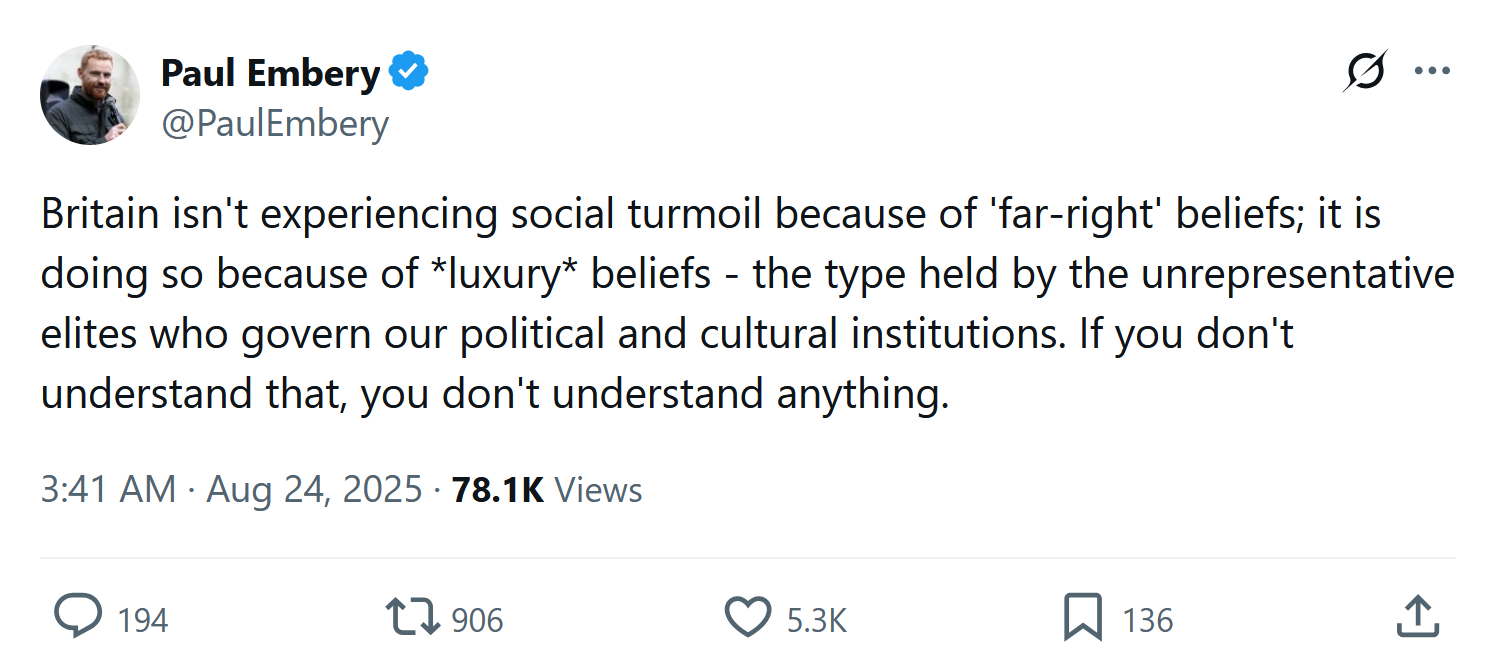
No wonder Brits are fed up with having this nonsense rammed down their throats. For the best part of a decade, British people—like practically all other Western Europeans—have been taught to hate themselves. They have been lectured about their nation’s historic evils and the supposed worthlessness, even nonexistence, of their culture. It is impressed upon us, without any regard for historical accuracy, that practically everything Britain is today was actually built by foreigners.
Celebrating diversity, we are told, doesn’t apply to the many regional and national identities native to the British Isles. Just last month, a young girl was sent home from her school’s Culture Celebration Day because she was wearing a dress with the Union Jack on it. Pupils were encouraged to come dressed in cultural costumes, with the aim of “recognising and celebrating the rich cultural diversity within our school community.” Except, the native British apparently weren’t included in that. The girl wasn’t allowed to give a prepared speech on British values and was told that her outfit was “unacceptable.” Other pupils were also sent away for wearing clothes representing various British cultures, including a boy with a St. George’s flag, a boy with a Welsh flag, and a boy sporting a traditional flat cap. Some cultures, it seemed, were more multicultural than others.
Why, it’s as if: