
“HOT COMMIE SUMMER:” Wall Street can’t make sense of the rise of Zohran Mamdani.
Wall Street leaders tend to think global. They travel between international offices and worry about global markets and trade policy shifts in Washington DC.
So it has come as a surprise to Manhattan’s executives that one of the biggest talking points during summer power lunches and boardroom meetings has been decidedly local: how to solve a problem like Zohran Mamdani?
Hundreds of business leaders are gathering in New York this week to hear from Mamdani, 33, the democratic socialist who stunned Wall Street when he emerged as the surprise winner of the Democratic primary for New York mayor this month.
It’s the start of a “hot commie summer”, Daniel Loeb, the billionaire founder of Third Point, a New York-based hedge fund, has observed.
In a session hosted on Tuesday by the Partnership for NYC, a consortium of 350 corporate giants, topics up for discussion in the global centre of capitalism included Mamdani’s campaign pledges to introduce state-owned grocery stores and immediately freeze rents for two million people living in rent-stabilised apartments.
Not surprisingly: Rise of Zohran Mamdani has Wall Street giving up on Gotham.
The polls, for now, show a likely Mamdani mayoralty, combined with a leftist city council and a state government that veers nearly as far left as Zohran.
All which spells disaster for those businesses who stay: Police defunding, higher taxes and government takeover of businesses like supermarkets.
And that gets us to why there were so many no shows Tuesday: the city’s business community doesn’t have to stay.
If you follow these big firms, as I do, you know they employ hundreds of thousands of New Yorkers — but fewer and fewer in recent years.
The harsh COVID lockdowns here gave them the excuse to move operations to places with lower taxes and regulations, mainly Florida and Texas, but also Utah and even Tennessee.
Mamdani will be another reason for the big banks to finally say goodbye to Gotham.
Regarding those state-owned grocery stores, Mamdani has a radical new plan to make them work:
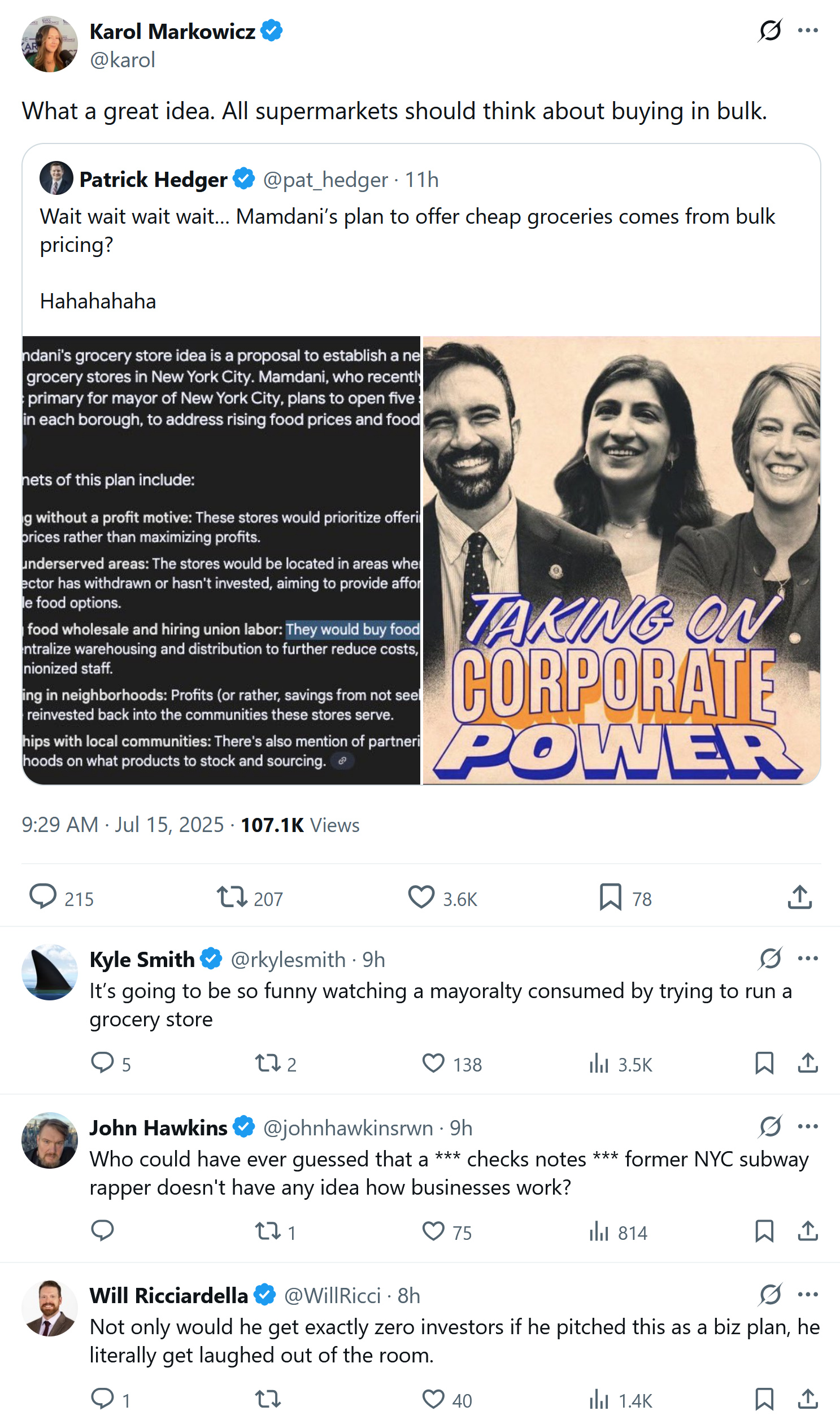
True buying in bulk has never been tried before.