
Mr Jarcy said that in “Plans” Le Corbusier wrote in support of Nazi anti-Semitism and in “Prelude” co-wrote “hateful editorials”.
VICHY FRANCE CONQUERS ENGLAND!
This black and white 1972 BBC documentary, titled “Moving to a ‘Town of the 21st Century,'” is simultaneously dreary and hilarious as hell. It’s about a young working class couple leaving their cramped flat and moving to
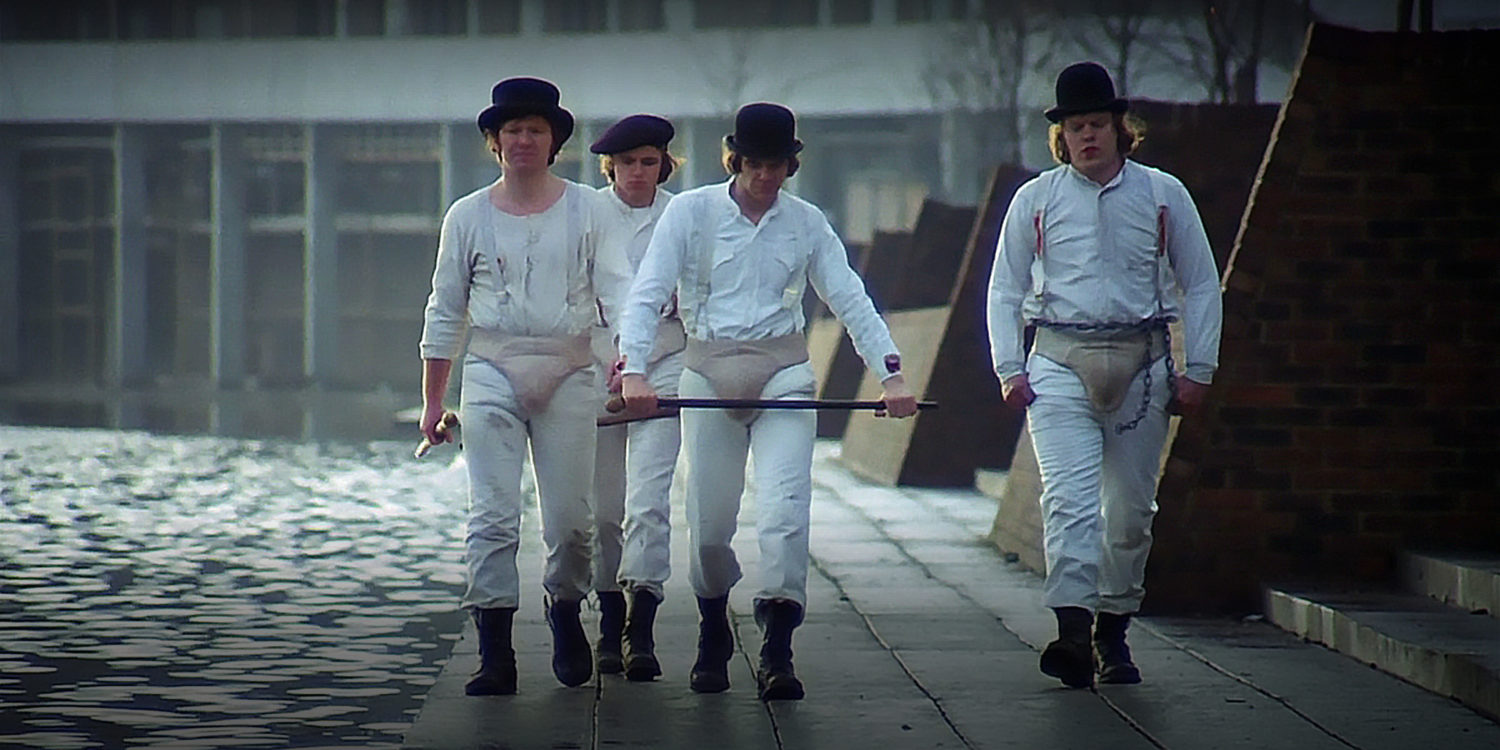
Thamesmead’s style of architecture was brutalism, a concrete-oriented architecture dreamed up by France’s Le Corbusier, after WWII, to cheaply build tower apartment blocks:
The use of béton brut was pioneered by modernist architects such as Auguste Perret and Le Corbusier. Le Corbusier coined the term béton brut during the construction of Unité d’Habitation in Marseille, France, built in 1952.
As Glenn noted in his New York Post column yesterday on “Trump’s Reflecting Pool glow-up:”
“Brutalism,” as a dominant architectural style, was a choice.
Gone were soaring columns, noble statuary depicting American heroes or abstract figures like Justice or Liberty, and welcoming spaces.
Instead we got modern architecture — which, as Tom Wolfe notes in his delightful book “From Bauhaus to Our House,” was quite literally designed to promote socialism.
Modern architects blamed bourgeois values for the horrors of World War II and wanted to promote socialist values instead.
They disdained “bourgeois” adornment and designed buildings to dwarf individuals, not uplift them.
As scholar James Scott points out, the French architect Le Corbusier, noted for his huge buildings amid vast, sterile plazas, dedicated his book “The Radiant City” thus: “To Authority.”
The Radiant City was published in 1933. So, which authority was Corbusier toasting a decade later?
In August 1940, the architect wrote to his mother that “money, Jews (partly responsible), Freemasonry, all will feel just law”. In October that year, he added: “Hitler can crown his life with a great work: the planned layout of Europe.”
Mr Chaslin said he had unearthed “anti-Semite sketches” by Le Corbusier, and ascertained that the French architect had spent 18 months in Vichy, where the Nazis ran a French puppet government, where he kept an office.
The Le Corbusier Foundation, which works to promote the architect’s memory and works, barely touches on this side of his life, relegating his Vichy role to an “extended stay” in the town.
Just don’t mention the war. In 1995, Theodore Dalrymple wrote of the Corbusier-inspired brutalist buildings in England:
Until quite recently, I had assumed that the extreme ugliness of the city in which I live was attributable to the Luftwaffe. I imagined that the cheap and charmless high rise buildings which so disfigure the city-scape had been erected of necessity in great gaping holes left by Heinkel bombers.
* * * * * * * * *
“A great shame about the war,” I said to the store assistant, who was of an age to remember the old days. “Look at the city now.”
“The war?” she said. “The war had nothing to do with it. It was the council.”
Embrace the healing power of and, to coin a phrase.
Regarding Francois Truffaut’s 1966 adaptation of Ray Bradbury’s Fahrenheit 451, James Lileks once wrote:
The only convincing dystopian movie I’ve ever seen is “1984.” Other moves look dated. They dress the set with a few Futuristic Things, change the collars on the jackets, tweak some element of society so something we take for granted is forbidden and bad. Old age is bad, or food is scarce, or overpopulation ruined everything — a particularly amusing claim for “Soylent Green,” as if you could feed a teeming population with compressed rectangles of old people. Same with Fahrenheit 451 — it appeals to an adolescent’s need for unambiguous cackling illiberal villains.
Here’s what I find interesting: whenever the sci-fi movies of the 60s and 70s wanted to set something in a horrible totalitarian world, they just shot on location at a government housing project.
Observing the families in the BBC video moving into the exterior set of A Clockwork Orange brings to mind another Lileks quote: “You realize: no one in a dystopia probably thinks they’re living in a dystopia.”
At the end of the video, Geoffrey Horsfall, one of ‘s architects, tells the BBC, “I’ve got every confidence in the future of Thamesmead and I think that it’s something that many of us will see, but certainly you younger people, you know, you will see this finished and complete and will be able to say, ‘Well, that chap I heard talking wasn’t all that wrong.’”
He was. The appropriately named Failed Architecture Website has a page titled: Ultraviolence in Representation: The Enduring Myth of the Thamesmead Estate.