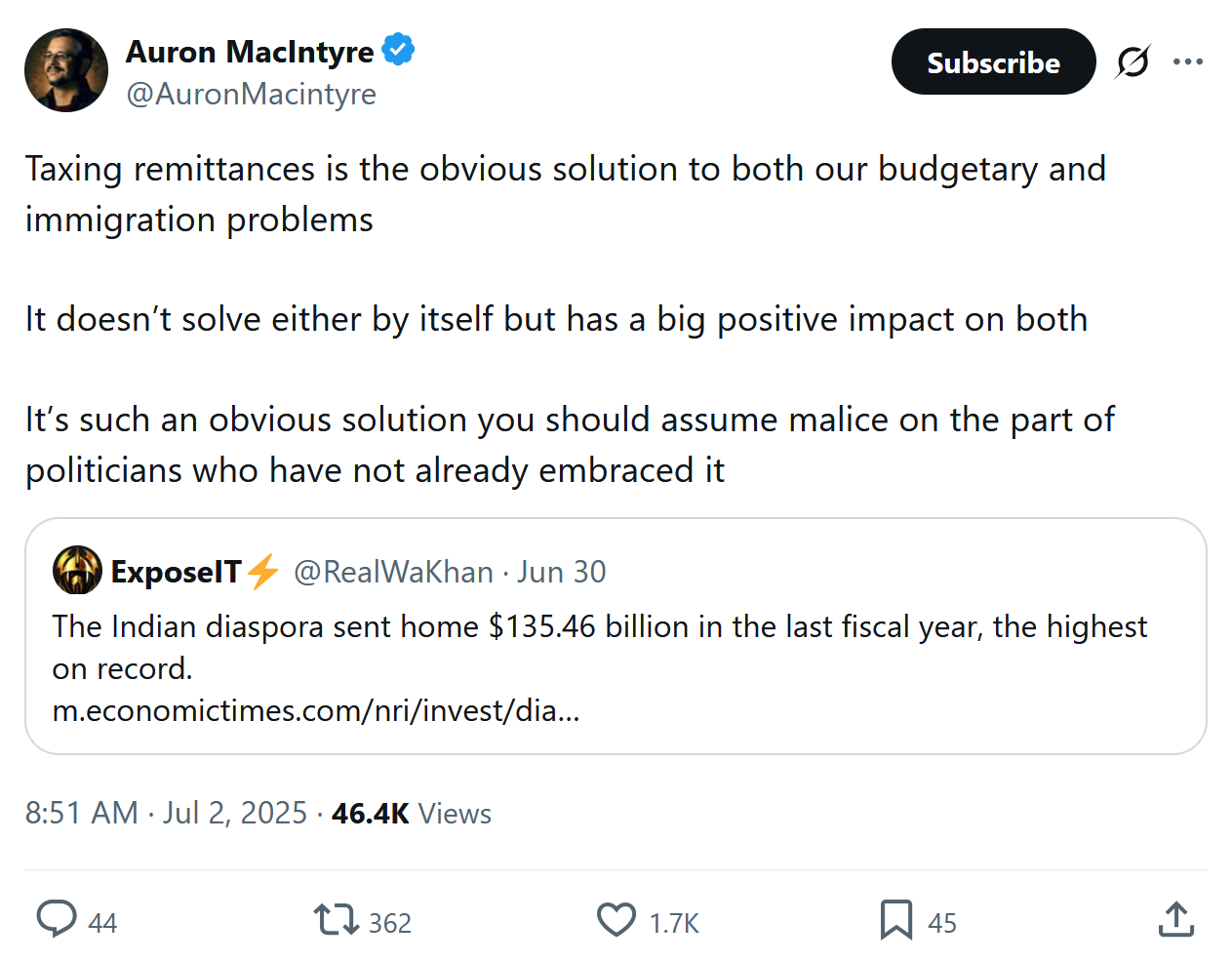
DNC-MSM FINALLY DISCOVERS A TAX IT HATES: Taxing remittances is a big risk for very little reward.
A proposal to tax remittances sent by individuals without Social Security numbers has passed the House and is now before the Senate. At 3.5%, the levy was initially expected to raise $26 billion over the next decade.
Changes made by the Senate on Saturday greatly narrowed the scope, so the tax would be 1%, and the yield only $10 billion over the next decade. However, the goals have remained the same: deter undocumented migration and recoup funds from those working outside legal status who send money to their families back home.
It might seem like easy money to tax migrants, but that doesn’t make it smart policy. The proposed tax risks undermining both financial transparency and national security. The policy would push billions of dollars into unregulated channels such as cryptocurrency exchanges, make law enforcement’s job harder and ultimately hurt the very communities the United States seeks to stabilize abroad for geopolitical reasons.
The U.S. is the world’s largest source of remittances, and Mexico has the highest dependency on them; 97% of the money Mexican expats send back home comes from the States ($64.75 billion in 2024). A 1% tax on remittances to Mexico alone could take much-needed funds away from migrants and their families and divert it to the state. While this might sound like a straightforward revenue win, the real-world impacts are more complicated and the slippery slope of allowing for remittance tax can have unintended negative consequences for everyone.