Maybe O’Sullivan is simply afraid to report on left-wing violence. In Los Angeles, the peaceful hooligans have been handing out fliers threatening journalists who attempt to film or photograph them, the sort of behavior that journalists routinely denounce as “fascist” or “extreme” when anyone else does it.
Update: O’Sullivan has finally surfaced. Sort of. He appears to have been hard at work producing a new segment for CNN. Does it have anything to do with the alarming outbursts of left-wing violence? No, of course not. He went to a conference of UFO enthusiasts and spoke to a “UFO lobbyist” who thinks Donald Trump will soon confirm the existence of alien life. “Greetings, do you all come in peace?” he told a group of freaks getting off a bus in the California desert. “We’re all Earthlings here.”
O’Sullivan has made clear that he finds the concept of left-wing extremism and political violence to be rather giggle-inducing. In one episode of his Emmy-nomited series, he conducted a friendly interview with Taylor Lorenz, the demented former New York Times journalist who accused Joe Biden of commiting “genocide” by refusing to impose COVID-related mask mandates. They discussed how Lorenz and other left-wing freaks were fawning over Luigi Mangione, the cold-blooded assassin who gunned down UnitedHealthcare CEO Brian Thompson.
More great optics from CNN, where O’Sullivan and Lorenz laugh it up over leftist murders…

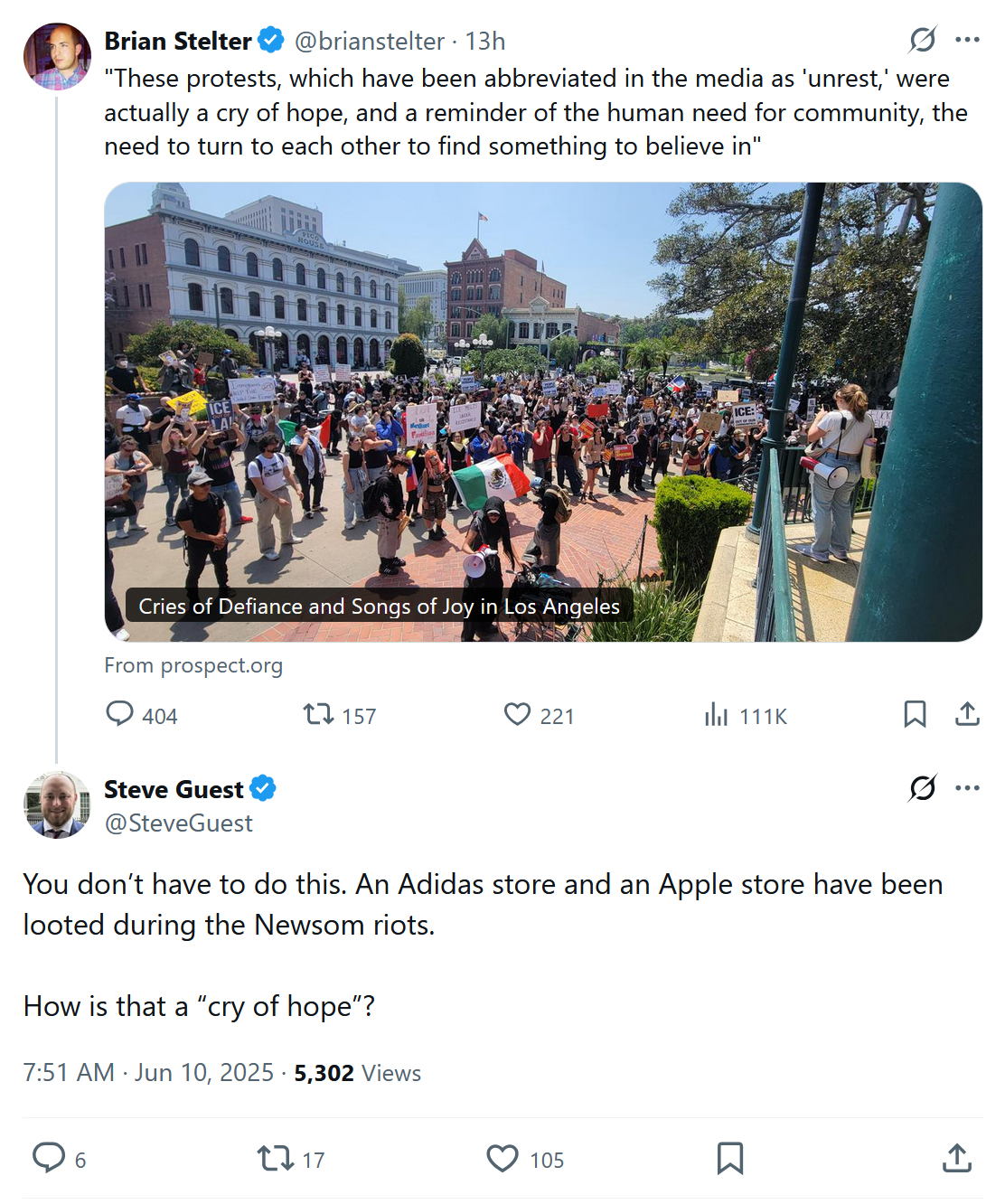
…And Brian Stelter excuses away leftist rioters:

During 2020’s Summer of Love, Jim Geraghty explored “The Rising Tide of Anti-Journalism:”
We’re witnessing an odd transformation in the media world. Increasingly, the debate within mainstream media institutions is what must not be written about, reported, or discussed.
* * * * * * * *
Major institutions of American journalism have decided that certain viewpoints must not be expressed within their pages, and certain factions and narratives must not be questioned, challenged, or opposed. Certain arguments must not be heard, certain supporting evidence must not be examined; certain ideas are simply too dangerous or malevolent to be brought to a wider audience. We are instructed that the very expression of them in any form makes certain staffers “feel unsafe” and thus must be treated as akin to a physical assault.
This is not the pursuit of knowledge; this is the avoidance of knowledge. This is not curiosity; this is an ironclad certainty that everything that is needed to be known about any given subject is already known. This is not informing the audience about what is going on in the world; this is making sure they don’t hear what is going on in the world, because it might run counter to a preferred narrative.
Whatever you want to call what these institutions are doing now, this is not journalism. This is anti-journalism.
Apparently, the new purpose of an opinions and editorial section is to reassure and soothe, not challenge or provoke. Shortly after internal outrage about Tom Cotton’s op-ed led to the ousting of James Bennet as the acting editorial-page editor of the New York Times, Katie Kingsbury, a deputy editorial-page editor, told the staff of the opinion section, “any piece of Opinion journalism — including headlines or social posts or photos or you name it — that gives you the slightest pause, please call or text me immediately.”
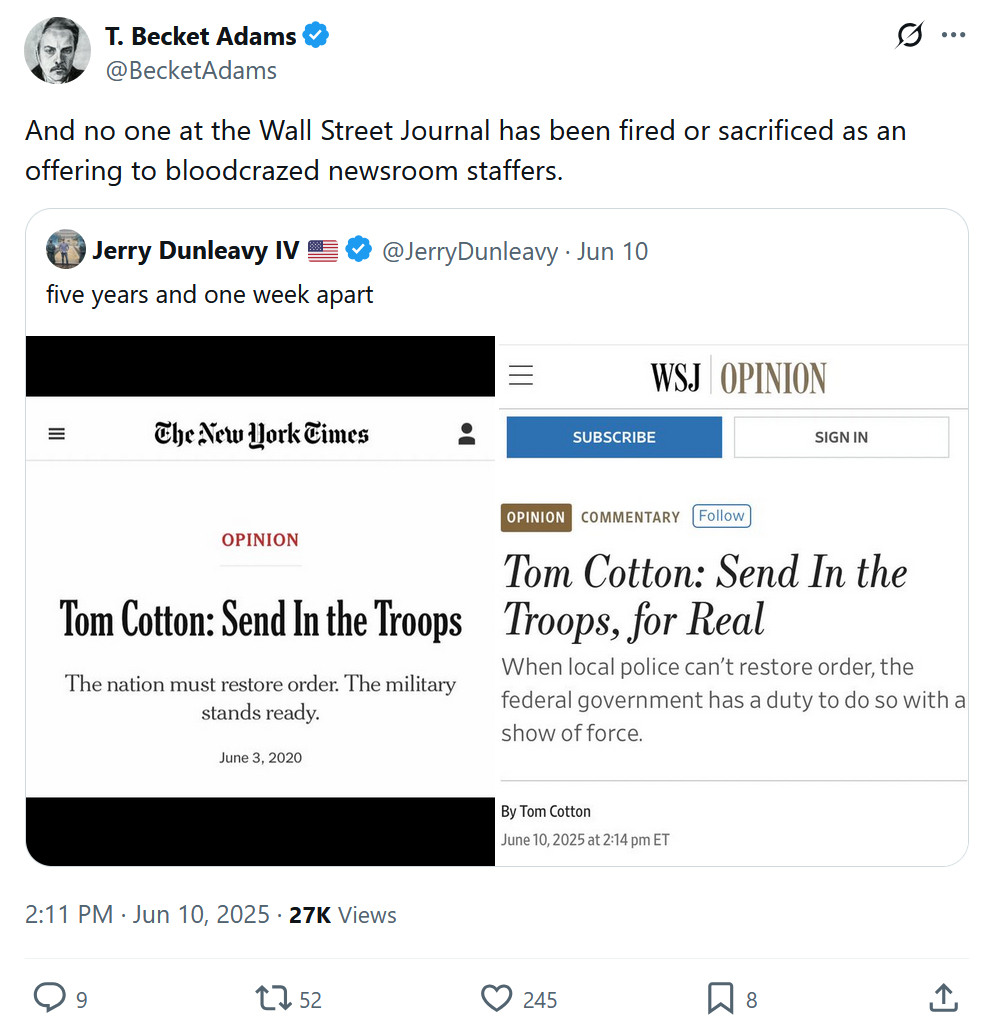
Hey, speaking of Tom Cotton: