15 DAYS TO SLOW THE SPREAD: Public Health Erred on the Side of Catastrophe.
Lockdowns and other mandates weren’t the exclusive driver of many of the various harms I’ve described; general fear of the virus also contributed to some of them. However, it should also be noted that public health officials—and media that overwhelmingly emphasized negative stories—whipped up a level of fear that led people to overstate the level of danger actually posed by the virus.
There’s one more way in which characterizing lockdowns and other mandates as “erring on the side of caution” plays a psychological trick: Since the phrase is embedded with the notion of good intentions, it conditions citizens to be forgiving of the bureaucrats and politicians who imposed them.
Note, however, that in most everyday usage of “erring on the side of caution,” the choice to “err” is made voluntarily by individuals who bear the consequences of their own decisions—or by others, like an airplane pilot or a surgeon, to whom we’ve voluntarily and unmistakably granted control of our well-being.
The grim impacts of lockdowns and other mandates, however, were coercively imposed on society, to say nothing of the fact that so many of the edicts represented gross usurpations of power and violations of human rights.
On top of all that, the edicts were reinforced by Orwellian censorship and ostracism leveled at those who dared raise questions that have now proven valid.
So make no mistake: Overreaching public health officials and politicians—and the journalists-in-name-only who served as their mindless, unquestioning megaphones—have fully earned our withering condemnation. Indeed, holding them accountable is essential to sparing ourselves and future generations from repeating this dystopian chapter of human history.
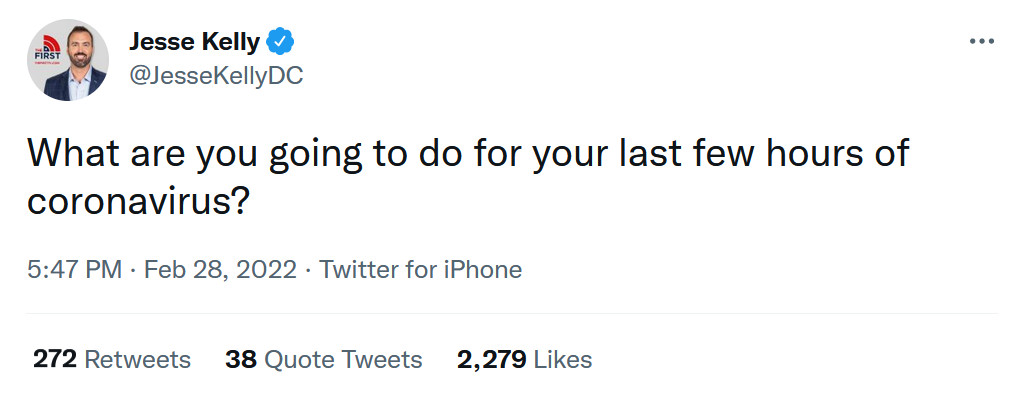
With an suddenly mask-optional State of the Union speech coming up tomorrow, read the whole thing.
Exit question: