UNEXPECTEDLY: Oakland pledged to cut its police budget in half. Then homicides surged.
Then a wave of gun violence engulfed the flatlands in East Oakland, home to the city’s most impoverished neighborhoods. Homicides spiked. Policymakers — and even the most devoted reformers — had to confront a paradox: that the Black and Latino neighborhoods most threatened by police violence are also the ones demanding better and more consistent law enforcement.
Task force members agreed that police brutality against Black and brown people is too common, that gun violence needs to end and that the city needs more services to address the underlying causes of crime. But while advocates wanted swift, dramatic change, others felt conflicted. In neighborhoods with high crime and slow police response times, Black residents winced at what sometimes felt like preaching from outsiders.
A poll released last week by the Chamber of Commerce showed that, citywide, 58% of residents want to either maintain or increase the size of the police force. That figure climbs to 75% in District 7, an area of East Oakland where gunfire exploded this summer.
Notably, the poll showed that support for increasing the size of the police force is higher among Black voters, at 38%, than white voters, at 27%.
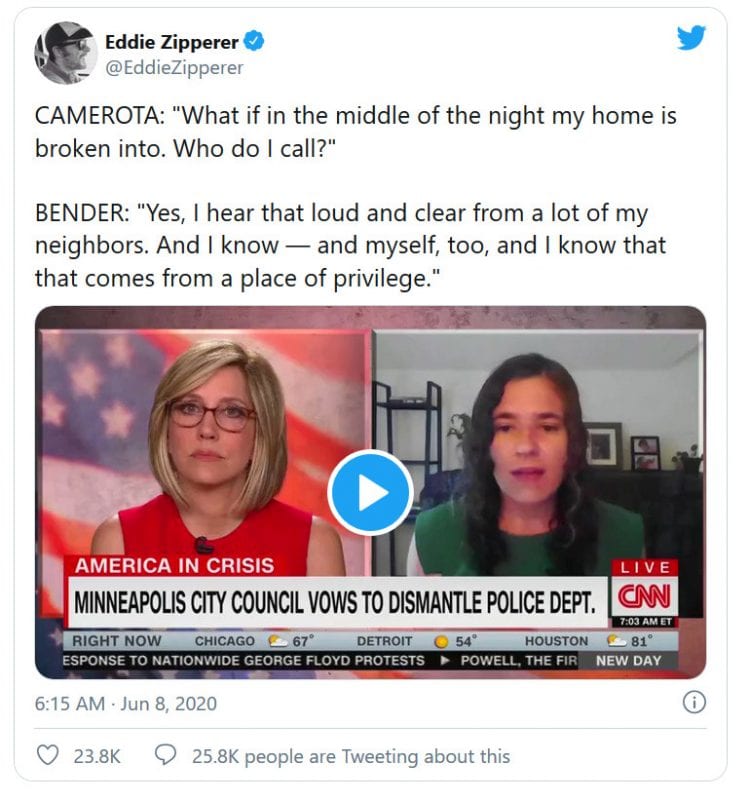
It’s a “paradox!” San Francisco Chronicle columnists and Minneapolis City Council members must be shaking their heads at all of the white privilege in Oakland’s black and Latino neighborhoods.