It helps, too, if your point of arrival in the US isn’t California, where a ragtag pro-Hillary resistance movement remains active. Instead, I flew direct to Dallas before commencing a forensic multistate listening tour through Texas, Arkansas, Tennessee, Kentucky, Iowa, Indiana, Missouri, and Oklahoma.
As it happens, all of those states voted for Trump. But their larger cities tended to side with Clinton, so a certain balance was available. If people from either side of the alleged Trump divide wished to speak out, I was there to hear them.
Except that nobody wanted to talk about Trump, Clinton or politics in general. This wasn’t due to apathy or lack of engagement. It was because there are more interesting topics of conversation, such as, well, just about everything. Work. Family. Sport. Music. Weather. Cars. Food. The semi-trailer carrying a few tons of bourbon that crashed and caught fire on the interstate. You know, topics people care about outside of election years.
Read the whole thing, although it isn’t entirely surprising to find that people who aren’t obsessed with politics aren’t obsessed with politics.
Both today’s outages at Drudge and Breitbart and yesterday’s Amazon problems highlight the vulnerabilities of cloud servers, as more and more websites are moving to a handful of cloud service providers, some of which (Amazon and Google) have demonstrated a pattern of hostility toward conservative sites.
As a result of that pattern of hostility, it didn’t take long for conspiracy theories about the outages to begin circulating on the Internet. Many conservatives deeply distrust the Big Three online platforms — Google, Facebook, and Twitter — and are quick to cry “censorship” anytime there’s a glitch in the system. The reputations of these companies are under increased scrutiny, especially among conservatives, and thus far they haven’t done much to ameliorate users’ concerns, which results in immediate suspicion anytime a site is down or content is removed.
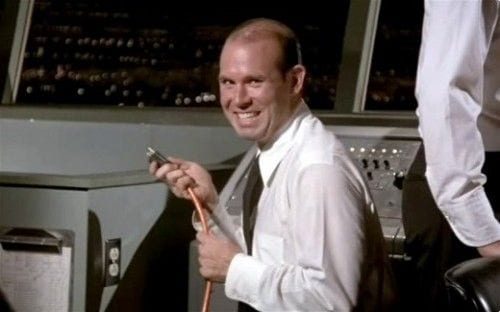
We at Instapundit have obtained an exclusive photo of the perpetrator in action.
BAN ALL THE THINGS! Kristin Tate at Reason TV on the left’s newest obsession that we all must get onboard right now because it’s super cool and this time it will like totally save the planet and everything — banning plastic drinking straws:
Angela Logomasini, a senior fellow at Competitive Enterprise Institute, told Tate that “the idea that you’re going to ban straws and save the world is ridiculous.”
Plastic pollution in the ocean is a real problem, but only about 1 percent of it comes from the U.S. Of that 1 percent, only a tiny fraction comes from plastic straws.
How can that be? Celebrities tell us Americans use 500 million plastic straws every day. “Polluting water and killing sea life,” according to actor Adrian Grenier.
The 500 million number is repeatedly used by the media. But it comes from a nine-year-old’s school project.
WeWork Cos., the SoftBank Group Corp.-backed startup that rents out co-working and office space, recently told its 6,000 employees worldwide that it won’t pay for any meals that include red meat, poultry or pork. It justified the policy as environmentally friendly.
* * * * * * * * *
The shift from function to meaning as a source of economic value also shapes who works where. Instead of trying to be blandly inoffensive, workplaces embody the cultural values of their tribe. That’s why we see Google employees refusing to work on Defense Department projects or companies boycotting the National Rifle Association.
Nothing says “We’re a tribe” like food taboos. Dietary restrictions establish boundaries and define identity. Think of kosher food and Jews, halal meat and Muslims, vegetarianism and Brahmins — or the cultural differences between completely secular vegans and paleo diet devotees.
“Any food taboo, acknowledged by a particular group of people as part of its ways, aids in the cohesion of this group, helps that particular group maintain its identity in the face of others, and therefore creates a feeling of ‘belonging,’” observes ethnobiologist Victor Benno Meyer-Rochow in a much-cited paper. Think of the ban as team building.
I’m thinking of it as something else as well. But it is alternately fascinating and more than a little worrisome to watch the left, whose unofficial motto used to be “do your own thing,” now wake up each day and ponder what to ban next.
Drebin noted that although the rates of liver cancer due to some causes — such as hepatitis B, a viral infection that causes inflammation of the liver — have decreased, the rates of the disease due to other causes — including obesity-related cirrhosis, or scarring of the liver — have gone up. Therefore, the rates of people getting liver cancer due to different causes are “probably balanced out,” he said.
What’s more, even though new drugs are available to treat hepatitis C, another viral infection that causes liver inflammation, these drugs “may not prevent the eventual development of liver cancer,” Drebin said.
There’s also the growth of non-alcoholic fatty liver disease, possibly related to the Food Pyramid and its emphasis on carbs and low-choline foods.
NEWS YOU CAN USE: We Are Not Doomed. “Consider this: The United States — the nation that activists constantly decry as not taking the challenge of climate change seriously enough, the nation that allegedly is dilatory in mobilizing its government and national resources to combat a mortal threat to our planet, and the nation that continues to grow in population and national output — also happens to lead the world in reducing carbon emissions. And it’s not close.”
Yes, but if you do it without empowering the political class it doesn’t count, because the whole point of the doomsaying is to empower the political class.
RELATED: Shirley Eaton is definitely alive. Dig this quote from June 18, 2008: “The most important thing for me was being a woman and having a family more than being a very famous glamorous actress.” Looks like she fulfilled all three roles rather successfully.
If Hillary had won and the GOP was blaming Russian hackers, the general press treatment — to the extent it was covered at all — would be a mixture of general derision for “conspiracy theory,” and laughing at the GOP for being dumb enough to be hacked by the Russians. You know it’s true.
The festive drink you’ll be holding during your beach vacation might have been produced with the assistance of full business expensing. The provision allows businesses to deduct the full cost of new equipment from their taxes the same year they purchase the equipment. In the past, deductions occurred over a lengthy, multiyear period.
For local breweries, distilleries, and wineries, buying more equipment means growing their business. It also means expanding positive economic impacts to manufacturers who produce barrels, brewing equipment and delivery vehicles.
Jose Mallea, owner of Biscayne Bay Craft Brewery in Miami, quickly took advantage of full business expensing. Following the passage of tax cuts he purchased $100,000 in new equipment and hired two new employees.
The Food and Drug Administration in a draft guideline on Tuesday outlined how such a status, which the agency said could help lower health-care costs, would work. Patients could answer questions on a mobile-phone app to help determine whether they should be able to access a medication without a prescription.
“Our hope is that the steps we’re taking to advance this new, more modern framework will contribute to lower costs for our health care system overall and provide greater efficiency and empowerment for consumers by increasing the availability of certain products that would otherwise be available only by prescription,” FDA Commissioner Scott Gottlieb said in a statement.
The proposal is meant to help companies start thinking about how they might seek approval for such drug sales. A new FDA regulation that would make the pathway official is expected next year. The move isn’t expected to lower the bar for shifting prescription drugs to over-the-counter status, Gottlieb said.
Finding a way to expand access to widely used prescription drugs has been a goal of regulators in recent years.
UNINTENDED CONSEQUENCES? NEVER HEARD OF ‘EM: The Lawfareblog raises “Uncomfortable Questions in the Wake of Russia Indictment 2.0 and Trump’s Press Conference With Putin.” It’s a long read, but asks questions those howling “treason!” ought to consider. A few good questions (among others):
“How will the United States respond when Russia and China and Iran start naming and indicting U.S. officials?…There is a lot of anger against WikiLeaks and a lot of support for indicting Julian Assange and others related to WikiLeaks for their part in publishing the information stolen by the Russians. If Mueller goes in this direction, he will need to be very careful not to indict Assange for something U.S. journalists do every day.
Remember, “The 1980’s called and they want their foreign diplomacy back.”
InstaPundit is a participant in the Amazon Services LLC Associates Program, an affiliate advertising program designed to provide a
means for sites to earn advertising fees by advertising and linking to Amazon.com.