Archive for 2018

OF COURSE IT DOES: Under Fire And Losing Trust, Facebook Plays The Victim.

One possible explanation for Facebook management’s blasé attitude is that the company has weathered complaints about violating user privacy since its earliest days. The first revolt came in 2006, when users protested that the service’s news feed was making public information that the users had intended to keep private. The news feed is now the company’s core service. In 2009, Facebook began making users’ posts, which had previously been private, public by default. That incident triggered anger, confusion, an investigation by the U.S. Federal Trade Commission, and, ultimately, a consent decree. In 2014, the company disclosed that it had tried to manipulate users’ emotions as part of an internal psychology experiment.

Nothing to see here, move along.

MARK ZUCKERBERG: “We have a responsibility to protect your data, and if we can’t then we don’t deserve to serve you.”

Here’s a timeline of the events:

In 2007, we launched the Facebook Platform with the vision that more apps should be social. Your calendar should be able to show your friends’ birthdays, your maps should show where your friends live, and your address book should show their pictures. To do this, we enabled people to log into apps and share who their friends were and some information about them.

In 2013, a Cambridge University researcher named Aleksandr Kogan created a personality quiz app. It was installed by around 300,000 people who shared their data as well as some of their friends’ data. Given the way our platform worked at the time this meant Kogan was able to access tens of millions of their friends’ data.

In 2014, to prevent abusive apps, we announced that we were changing the entire platform to dramatically limit the data apps could access. Most importantly, apps like Kogan’s could no longer ask for data about a person’s friends unless their friends had also authorized the app. We also required developers to get approval from us before they could request any sensitive data from people. These actions would prevent any app like Kogan’s from being able to access so much data today.

In 2015, we learned from journalists at The Guardian that Kogan had shared data from his app with Cambridge Analytica. It is against our policies for developers to share data without people’s consent, so we immediately banned Kogan’s app from our platform, and demanded that Kogan and Cambridge Analytica formally certify that they had deleted all improperly acquired data. They provided these certifications.

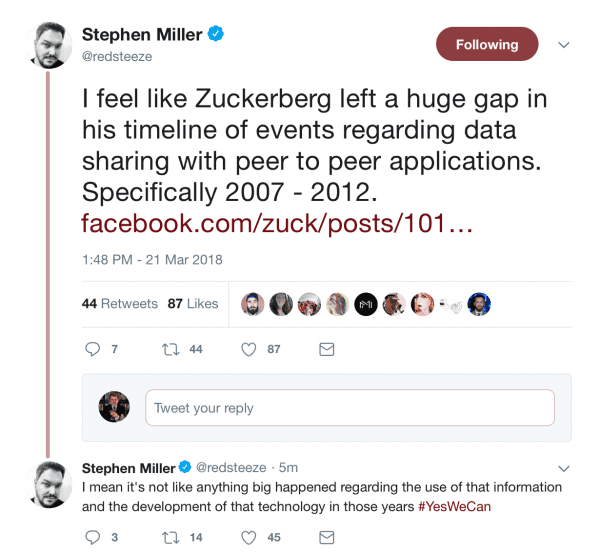
Whether or not you trust CA’s certification or Zuckerberg’s explanation, Stephen Miller notes a curious omission:

Indeed.

Update: Sorry — had attached the wrong tweet to this post. Fixed now.

THIS ALL SEEMS TO HAVE STARTED AFTER TRUMP’S TRIP TO SAUDI ARABIA, WHERE THE PRESS COMMENTARY WAS MOSTLY FOCUSED ON MAKING FUN OF THE “ORB” PICTURE: The Saudis Take On Radical Islam: The crown prince charts a course toward moderation, which prevailed before the 1979 attack on Mecca.

The year 1979 was a watershed for the Middle East. Iranian revolutionaries overthrew the shah, the Soviet Union invaded Afghanistan, and Sunni Islamic extremists tried to take over the Grand Mosque of Mecca in Saudi Arabia, Islam’s holiest shrine. Crown Prince Mohammed bin Salman hadn’t been born, but he is fighting the ghosts of 1979 as he dramatically reforms the kingdom.

The attempted takeover of Mecca was a defining event in my country, mainly because of what happened next. Saudi rulers, fearing Iran’s revolutionary example, decided to give more space to the Salafi clerical establishment in hope of countering the radicals. Traditional Salafi preachers are neither violent nor political, but they hold a rigid view of Islam. Their legal rulings and attempts to police morals made the kingdom increasingly intolerant, setting back the gradual opening up that had occurred in the 1960s and ’70s.

In Saudi schools, education was largely in the hands of foreign nationals, many with Muslim Brotherhood backgrounds. In the 1960s and ’70s, Saudi Arabia was more concerned with Gamal Abdel Nasser’s Arab nationalism than with Islamist radicalism. Thus the Muslim Brotherhood wasn’t much of a worry. But the combination of the brotherhood’s political outlook and the rigid Salafi doctrine injected a virus into the Saudi education system. That virus allowed Osama bin Laden to recruit 15 Saudis to take part in that terrible deed on Sept. 11, 2001. We Saudis failed those young men, and that failure had global implications.

The Salafi clerics and Muslim Brotherhood imports also worked in concert as they were given unsupervised access to private donations to fund mosques and madrasas from Karachi to Cairo, where they generally favored the most conservative preachers.

The policy makers’ idea was simple: Give the political Islamists and their Salafi affiliates room to influence educational, judicial and religious affairs, and we will continue to control foreign policy, the economy, and defense. Saudi rulers were handling the hardware, while radicals rewrote the nation’s software. Saudi society, and the Muslim world, is still reeling from the effects.

I can attest that when the Saudi money hit northern Nigeria, the Islam there went from a rather mellow Sufi variety to, well, Boko Haram. Even if all that happens is the Saudis stop funding and promoting radical Islam worldwide, that will be huge. Remember, after the Soviet Union folded, all sorts of “grassroots, authentic” terrorist movements dried up along with the Soviet funding. Something similar could happen here.

WHO COULD HAVE SEEN THIS COMING? Pro-Life High School Students Plan A Walkout. Let a thousand lawsuits bloom when schools treat them differently than they did the GunSense-backed kids.

OPEN THREAD. That is all.

K-12 IMPLOSION UPDATE: Students’ visit to gun range ‘none of your damn business,’ parents say.

Angered by word of the disciplining of two Lacey High School students for a gun-related social media post, 200 parents, community members and other supporters of the Second Amendment on Monday let the Board of Education know they don’t want the district trampling on their rights or meddling in their home lives.

“You guys are reaching into our private life, the private life of our children,” said one parent, Lewis Fiordimondo, who has twins in pre-kindergarten and a daughter at the high school. “It’s not your place. It’s not the school’s place.”

Another dad, Frank Horvath, whose son is a senior at Lacey High, put things in blunter terms.

“It’s none of your damn business what our children do outside of school,” Horvath told the seven board members toward the end of a four-hour meeting, most of it occupied by speaker after speaker venting anger and frustration at school officials largely unable to respond due to confidentiality rules.

The unusually large turnout for Monday night’s board meeting in the high school auditorium was prompted by a five-day in-school suspension of two senior boys after one of them posted a photo of themselves with guns at a local shooting range, away from school property and not during school hours.

Punch back twice as hard.

“HERE’S YOUR DAILY REMINDER OF HOW PATHETIC CNN HAS BECOME:” Parkland’s Kyle Kashuv Says CNN Canceled Interview After RT Calling Out Their Bias.

Not just any retweet: Kashuv “said that CNN cited a Clay Travis retweet calling out Brooke Baldwin for being a ‘fake news hypocrite.’ Travis, of course, was the sports commentator who was booted off of Baldwin’s CNN Newsroom in September for saying ‘boobs.’”

Not surprisingly, Travis will be interviewing Kashuv on Friday.

Related! Category Five Stormy: CNN Primetime Spends 149 Minutes Ogling Stormy Daniels Scandal.

BECAUSE PEOPLE ARE STUPID: Why no one should be surprised that hospitals face dangerous opioid shortages. “This shortage doesn’t surprise me, though I’m surprised that the media appear to be concerned now about an opioid shortage after spending so much energy on whipping up political and public anger toward opioids.” Actually, the media’s 180 from one kind of hysteria to the other is the least surprising thing of all.

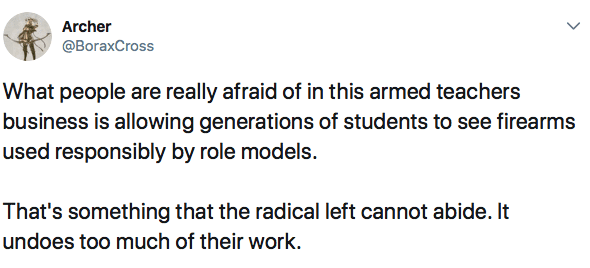
I THINK THERE’S SOMETHING TO THIS OBSERVATION: