AT AMAZON, Hot New Releases, Updated Hourly.

Plus, new Kindle Daily Deals.

AT AMAZON, Hot New Releases, Updated Hourly.
Plus, new Kindle Daily Deals.
LIZ SHELD’S MORNING BRIEF: GOP Slammed in VA, Trump in China and Much, Much More.
BOY, MATTHEW DOWD REALLY SEEMS LIKE A JERK HERE.
HEALTH: FDA Releases New Guidance on Calorie Rule. “Does regulation apply to beer? ‘It depends’.”
The Food and Drug Administration on Tuesday released draft guidance to help chain restaurants and groceries comply with an Obamacare regulation that requires calorie labeling on menus.
FDA commissioner Scott Gottlieb said the guidance is “practical, efficient and sustainable,” in an attempt to alleviate concerns from pizza chains and grocers that the government was moving forward with an onerous Obama administration rule that carries criminal penalties for “misbranding” food.
Questions about the rule remain, since the guidance only contains “nonbinding recommendations.” In addition, chain restaurants could be confused by language in the guidance related to what draft beers must be labeled. The FDA says, “It depends.”
Complying with “It depends” could be problematical, to say the least.
And:
Pizza chains represented by the American Pizza Community—including Domino’s, Papa John’s, and Little Caesars—raised the issue that pizza can contain up to a billion topping combinations, making the rule unworkable unless they can comply online. Domino’s has said the vast majority of their orders are already placed online, where customers can use a calorie tracker for any pizza they order.
The new FDA guidance does not allow pizza chains to comply online but attempts to provide more flexibility with allowing companies to use calorie ranges.
The regulatory state marches on.
BYRON YORK: Trump’s 12 months of style clashing with substance.
Staunch Democrats in the room opposed the substance of Trump’s agenda, just as they would have opposed that of any other Republican president. Yet, most of their complaints were about Trump’s style. The more independent-minded, as well as the Trump voters, likely support much of what the president is doing in terms of policy. But they still felt the need to express disapproval of his tone.
At the same time, several voters expressed satisfaction with their own lives and their own economic situation. “The construction business has just gone off the charts,” said David, a 50-something Trump voter who made his living in the industry. Such comments mirror larger measures of economic satisfaction, such as new reports that consumer confidence has risen to its highest level since December 2000.
That is the Trump phenomenon. He is a president stuck below 40 percent job approval at a time of rising economic growth, swelling consumer optimism, and a roaring stock market. Despite all the good news, even some of his supporters, the ones who cheer on his actions on deregulation, judicial nominations, border security and more, have reservations about him. Tony, a Trump voter in his 50s who described himself as a Republican-leaning independent, summed up their feelings in an almost poignant way. “What most disappoints me is he’s such an incredibly flawed individual who’s articulated many of the values I hold near and dear,” Tony told Hart. “The messenger has overwhelmed the message.”
Honestly, I think this has helped him as much as it’s hurt him, as Dems and the press have kept chasing tweets, giving him room to maneuver on policy. But that may not remain the case.
CHANGE: Republican Tax Plan Would Slam California Housing Market.
The bill would cap the size of mortgage loans for which taxpayers can deduct interest payments at $500,000. In most regions of the U.S., that represents a small fraction of properties.
But in the priciest markets, concentrated in some of the nation’s largest coastal cities, the impact could be significant. In the San Jose, Calif., metropolitan area, 75% of new mortgage loans thus far in 2017 were for more than $500,000, according to an analysis by CoreLogic Inc., a housing data provider. The median home price there is more than $1 million, and even small starter homes can climb well above the proposed cap.
In the San Francisco metro area, 60% of new loans were for more than $500,000, while in Los Angeles and San Diego, the figures were 44% and 37%, respectively.
Maybe it’s time for California to end its war on affordable housing.
AT AMAZON, on sale, Nature Made Coq10 400 Mg, Naturally Orange, 40-Count.
Plus, Deal of the Day, Hoover BH50020PC Linx Signature Cordless 18V Lithium Ion Stick Vacuum Cleaner.
OR EVEN, YOU KNOW, STOP STONING THEM: Young Muslim women are having sex. Let’s stop shaming them for it.
MONICA SHOWALTER: Did Fusion GPS pay journalists to publish fake news?
Circumstantial information also signals that there may be more than just killing stories in Fusion GPS’s repertoire. According to an investigation by The Tablet, Fusion GPS also influences reporters to write stories, effectively planting them. Halvorssen accuses reporter Ken Silverstein, who identifies himself as a journalist with cash-flow problems and a friend of Fusion GPS’s founder Glenn Simpson, as one such person who has taken his cue to write based on information that apparently came from Fusion GPS, although Silverstein denies it. Silverstein’s work generally seems to be very good yet what he wrote about Halvorssen is utter rubbish, seemingly out of character.
With those kinds of allegations going on, it’s very much the public’s right to know whether journalists have been bought off by firms like Fusion GPS, which has been known to take money from the Russians. There’s not a reputable news outlet out there that will tolerate this kind of activity and yes, anyone who does engage in such profit-taking, for whatever reason without telling anyone does get fired, as the recent firing of Wall Street Journal chief foreign correspondent Jay Solomon shows. Readers have a right to know that their news is untainted by sly little payments from special interests made under the table.
Particularly if they are foreign governments, in the case of Fusion GPS.
Developing…
SORRY, KIDS, NO NEW LAWS FOR YOU UNTIL YOU CAN NAME THE ONES YOU’VE ALREADY GOT:
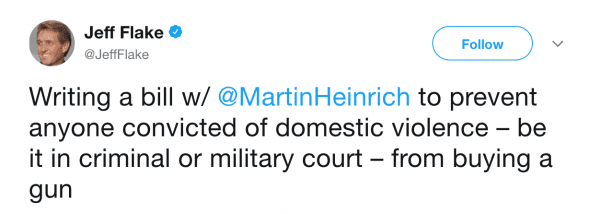
Best suggestion: Name it the Flake-Hatch Redundancy Act of 2017.
Hey, Senator: See 18 U.S.C. 922(g)(9) which bans firearm possession by anyone “who has been convicted in any court of a misdemeanor crime of domestic violence.”
IT IS YOUR PATRIOTIC DUTY, COMRADE: Will Americans Die Young Enough to Save Pension Plans?
AND ITS A SHOCKED FACE AGAIN: Kim Jong Un’s Nuke Test Site Appears Dangerously Contaminated.
THEY HATE US; THEY REALLY, REALLY HATE US: Friend says Rand Paul does not know what prompted attack.
THIS IS MY SHOCKED FACE: Network newscasts don’t mention Brazile Clinton-DNC revelations.
CREEPY, YEAH. SURPRISING? NO. I’VE MET FEMINISTS AND THE KIDS THEY BRAINWASH: Engineer Builds, Marries His Own Sexbot, Now Makes Them for Other Men.
INTERESTING: Robot Surgeons Worse by Pretty Much Every Metric.
A BAD IDEA, LOOSE IN THE WORLD: On this day, November 7, 100 years ago.
BUT OTHER THAN THAT, B & N, HOW GOES THE BOOK BUSINESS? Loss of Focus or Re-Inventing Themselves?
ANOTHER THING YOU CAN’T SAY: The Poor Don’t Pay Enough Taxes.
InstaPundit is a participant in the Amazon Services LLC Associates Program, an affiliate advertising program designed to provide a means for sites to earn advertising fees by advertising and linking to Amazon.com.